Structural steel is an essential component of modern construction, providing strength, durability, and design flexibility for projects ranging from commercial buildings to industrial facilities and warehouses. The type of steel you choose also affects structural integrity, ease of fabrication, and durability.
For different construction projects, different steel profiles and grades are required, however. Knowing the types of structural steel, their properties, and uses can help builders, engineers, and project managers make informed decisions. Each profile has a specific role within a structure, whether it is an I-beam, a hollow section, a channel, or an angle.
Quick Summary
-
Structural steel offers strength, stability, and flexibility for today’s building projects.
-
Common structural steel sections are I-beams, H-beams, channels, angles, and hollow sections.
-
The load requirements, design specifications and environmental conditions should be considered when selecting steel grades and profiles.
-
A good structural steel manufacturer should comply with relevant quality, fabrication and delivery requirements.
-
The choice of materials can enhance efficiency in construction, durability, and long-term value.
Understanding Structural Steel and Its Role in Modern Construction
Structural steel is steel manufactured and formed to be used in load-bearing frameworks and other structural components. It has a high strength-to-weight ratio and predictable engineering properties. It also lends itself to prefabrication. For these reasons, it is widely used.
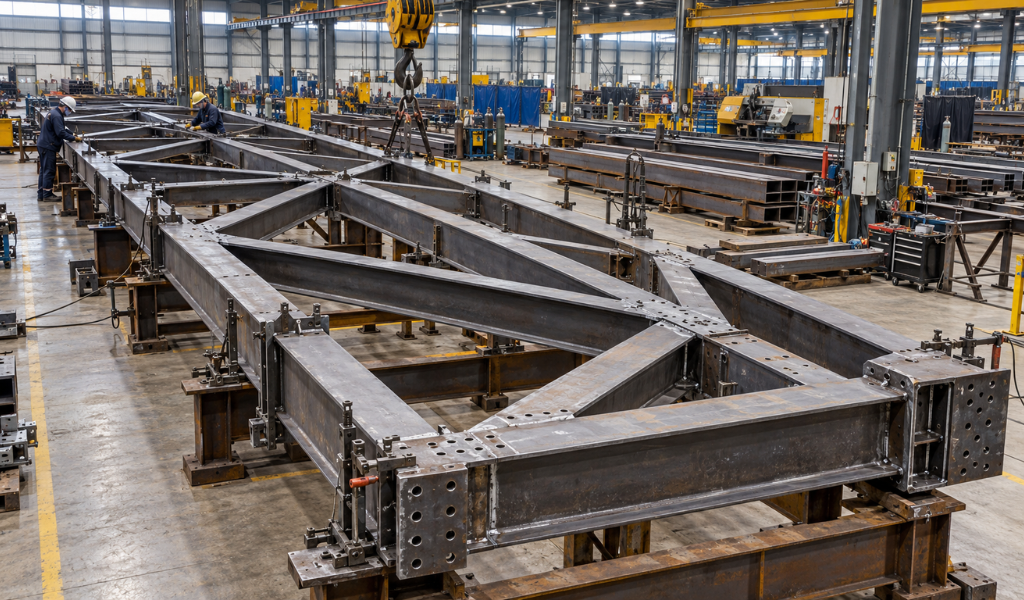
Other materials must be formed largely on site. Structural steel can be fabricated to given dimensions prior to reaching the site . This can help reduce installation time, improve accuracy, and assist with more efficient project planning.
Factories, warehouses, commercial buildings, industrial plants, bridges, and large-span structures are usually built with structural steel. Its appropriateness is determined by factors such as load capacity, steel grade, connection design, corrosion protection, and building regulations in force.
What Are the Common Types of Structural Steel?
The choice of the most appropriate structural steel profile depends on the purpose of the component, the forces it must withstand, and the general composition of the building.
1. I-Beams and H-Beams
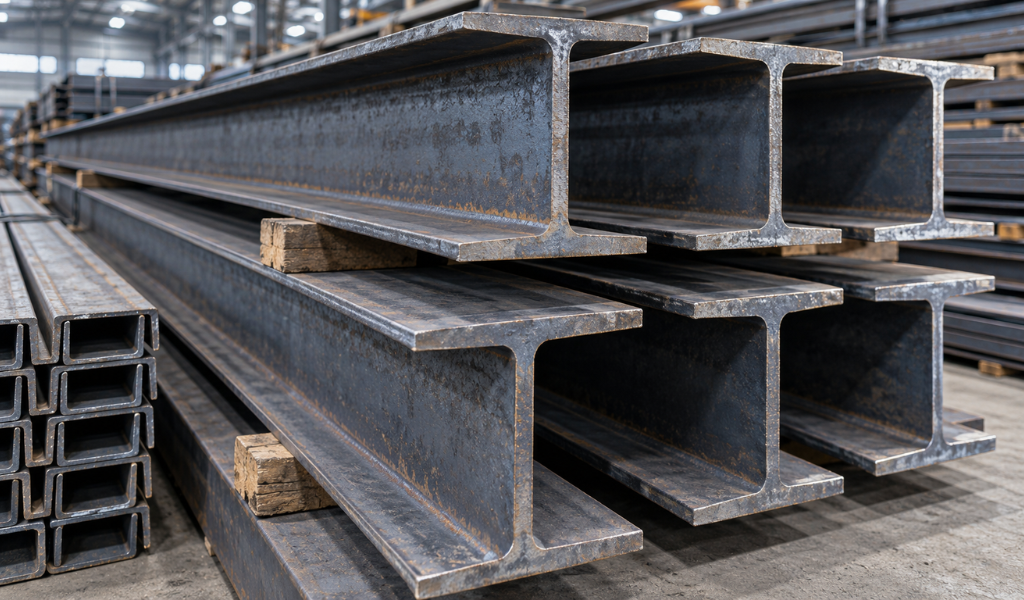
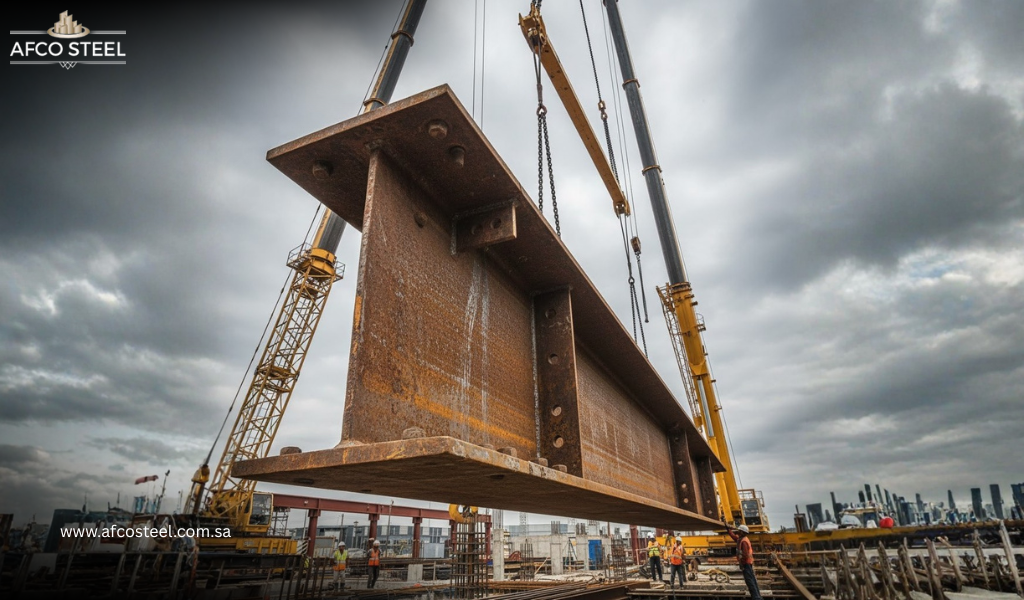
I-beams and H-beams are often used in structural frameworks because they are very strong for their weight.
I-beams are relatively narrow in shape, but H-beams are generally wider and have a shape more appropriate to many heavy structural uses. The suitable section is dependent on design, span, loading conditions, and connection requirements.
Typical uses: Building frames, industrial structures, bridges and columns, floor supports.
2. Steel Channels
Steel channels have a U-shaped or C-shaped cross-section. Their design makes them useful as supports for lighter structural elements and as framework members.
Channels are often employed where a practical compact section is required. Their capacity is a function of section dimensions, orientation, and support conditions.
Common uses: Wall framing, equipment supports, roof structures, brackets and secondary framing.
3. Steel Angles
Steel angles are L-shaped in cross-section. Their sides can be equal or unequal depending on the construction. They are versatile components, used in connections, supporting frameworks, and bracing.
They are particularly suitable for projects where tight reinforcement or connection between structural members is required.
Typical applications are bracing systems, tower structures, trusses, frames, and connection assemblies.
4. Hollow Structural Sections
Hollow Structural Sections (HSS) are square, rectangular, and circular steel tubes. Depending on the design, the closed profiles can provide useful strength against bending and torsional forces.
They are also prized for their clean look, making them useful for exposed architectural frameworks.
Common applications: Columns, roof trusses, building frames, canopies, industrial supports, and architectural structures.
5. Steel Plates and Flat Sections
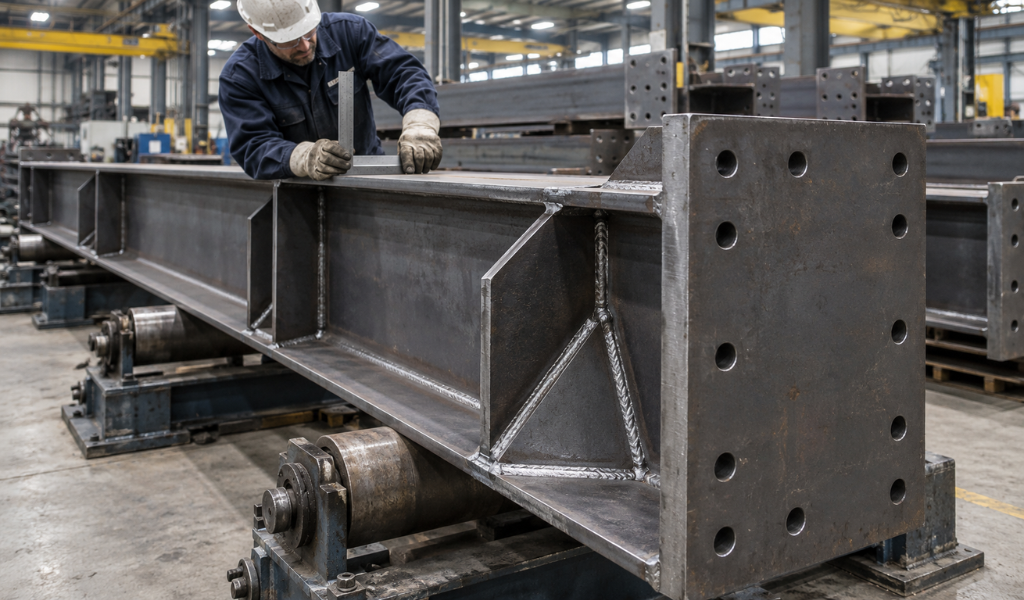
Steel plates are flat rolled products that are used to manufacture structural components and to reinforce connections . The dimensions and thickness depend upon engineering requirements.
Plates are often combined with beams, columns, and other sections to create a complete structural assembly.
Typical uses include base plates, gusset plates, connection plates, stiffeners, and fabricated steel members.
How Do Structural Steel Grades Differ?
Grades specify the material properties of steel, such as strength, toughness, and weldability requirements based on the specification. Profiles specify the shape of steel.
For example, S275 and S355 are the most widely used structural steel grades in European standards. S355 usually has a higher minimum yield strength than S275 for comparable thicknesses, but the actual values are determined by the product standard and thickness.
There is more to choosing a grade than simply comparing strength numbers. Engineers should also consider the intended use, the fabrication process, connection details, service conditions, and relevant standards.
Practical Comparison of Structural Steel Sections
The following table provides a starting point for comparing common structural steel sections. Final selection should always follow the project's engineering calculations.
|
Steel section |
Main characteristics |
Typical applications |
|
I-beams and H-beams |
Efficient load-bearing profiles |
Main beams, columns and industrial frames |
|
Steel channels |
C-shaped or U-shaped profiles |
Secondary supports, brackets and framing |
|
Steel angles |
L-shaped profiles for connections and bracing |
Trusses, bracing and support assemblies |
|
Hollow sections |
Square, rectangular or circular closed profiles |
Columns, roof structures and exposed frames |
|
Steel plates |
Flat products available in different thicknesses |
Base plates, stiffeners and connections |
Structural Steel Applications in Construction
Structural steel is versatile and can be used for a wide range of buildings and infrastructure.
Industrial Buildings and Warehouses
Steel frameworks are excellent for warehouses, factories and distribution centers because they can support wide open internal spaces. The design can incorporate operational requirements such as equipment access, storage arrangements, and oversized doors.
Commercial and Multi-Storey Buildings
Many commercial developments use structural steel beams and columns to construct their load-bearing structures. Good connections and bracing systems help safely transfer the loads through the structure.
Infrastructure and Specialised Structures
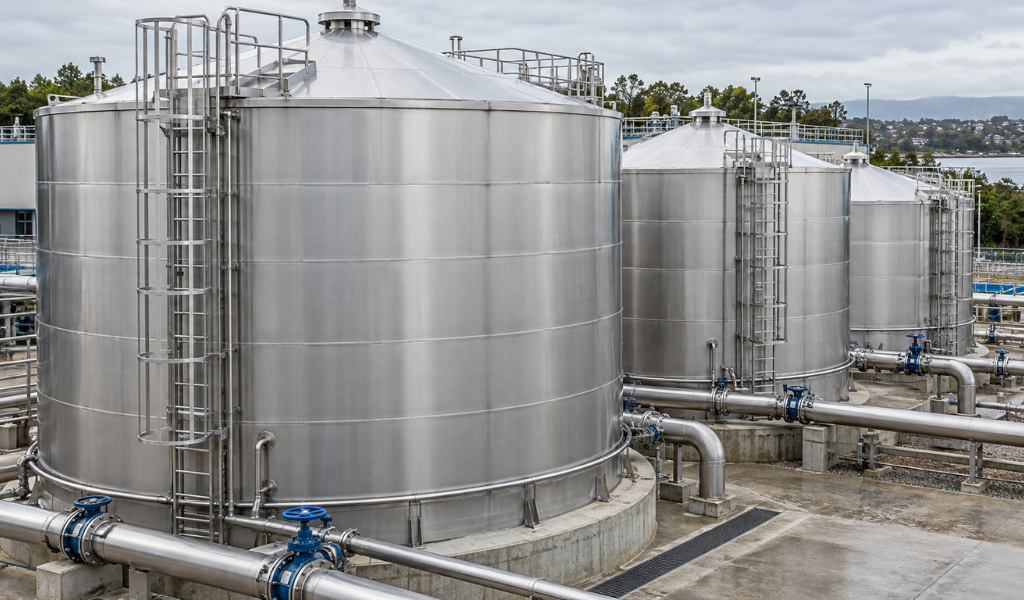
Bridges, platforms, towers, and equipment-support structures can be constructed with different steel profiles depending on their loading and environmental conditions. Steel, in severe environments, needs special attention to corrosion protection and periodic inspection.
Also read: How to Choose a Steel Fabrication Company for Industrial Projects?
What to Check Before Selecting a Structural Steel Manufacturer?
Choosing the right supplier is a critical step in successfully delivering quality, safety, and reliable project delivery. Some things to think about before you make up your mind.
-
Material quality: Confirm that the supplied steel meets the specified grade, dimensions, and applicable product standards.
-
Fabrication capabilities: Check whether the manufacturer can produce the required profiles, connections and fabricated assemblies.
-
Quality assurance: Ask about material traceability, inspection procedures, dimensional checks and relevant documentation.
-
Corrosion protection: Determine whether the project requires galvanising, protective coatings or another specified treatment.
-
Delivery and project coordination: Review production capacity, lead times, transport arrangements and the ability to meet project milestones.
-
Technical support: Look for a supplier that can communicate clearly about specifications, fabrication requirements, and project coordination.
These checks are particularly useful for the design of industrial facilities and commercial steel structures in Saudi Arabia. Afco Steel is one of the options to be considered in the evaluation of steel structure solutions for construction requirements.
Conclusion
Getting to know the common types of structural steel can help construction professionals select the best materials for different structural needs. I-beams and H-beams provide essential load-bearing support, channels and angles are used for framing and bracing, hollow sections offer flexible structural choices, and steel plates facilitate connections and fabricated assemblies.
The optimal choice depends on engineering calculations, material grades, environmental conditions, and project specifications. Project teams can improve construction efficiency by considering these factors along with a capable manufacturer with structural quality and safety.
If you are planning an industrial or commercial development, look into the structural steel options available from Afco Steel and speak to a suitable supplier about your project requirements before you finalise your specifications.
FAQs on Structural Steel
1. What are the most common types of structural steel used in construction?
The most common types include I-beams, H-beams, steel channels, steel angles, hollow structural sections, and steel plates. Each serves different structural and fabrication purposes.
2. What is the difference between I-beams and H-beams?
I-beams generally have narrower flanges, whereas H-beams have wider flanges and a profile often suited to heavy structural applications. The correct choice depends on loading, span, and engineering requirements.
3. Which structural steel is best for industrial buildings?
There is no single best option for every industrial building. I-beams, H-beams, hollow sections, channels, and plates may all be used, depending on the structural design, building span, loads, and site conditions.
4. How do I choose the right structural steel sections for a project?
Consider the required load capacity, span, steel grade, connection design, corrosion exposure, fabrication needs, and applicable standards. A qualified structural engineer should verify the final selection.