Choosing the right steel water storage tanks for a commercial property is an important decision. The tank needs to provide reliable water storage while handling the demands of daily operations, available space, environmental conditions, and long-term use.
The appropriate tank volume, size, and building for the work can help improve water management efficiency from offices to hotels, factories, warehouses, and step-based facilities. For people searching for steel water tanks in Saudi Arabia, it is also important to focus on native climate conditions and set up requirements as well.
Quick Summary
-
Choose tank capacity after water consumption estimates.
-
Choose steel based on durability, corrosion resistance, and water application.
-
Consider available space, foundation, and installation access.
-
Space availability, foundation, and installation access
-
Search for commercial water storage tanks with proper coating or protection.
-
Choose an experienced manufacturer capable of tank design and fabrication for commercial to industrial use.
Why Are Steel Water Storage Tanks Suitable for Commercial Use?
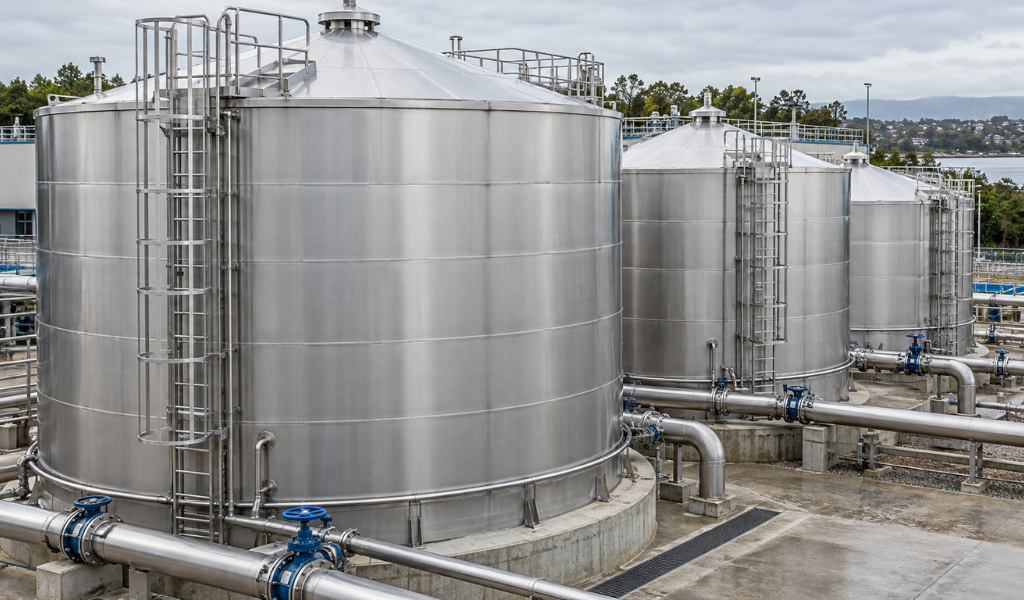
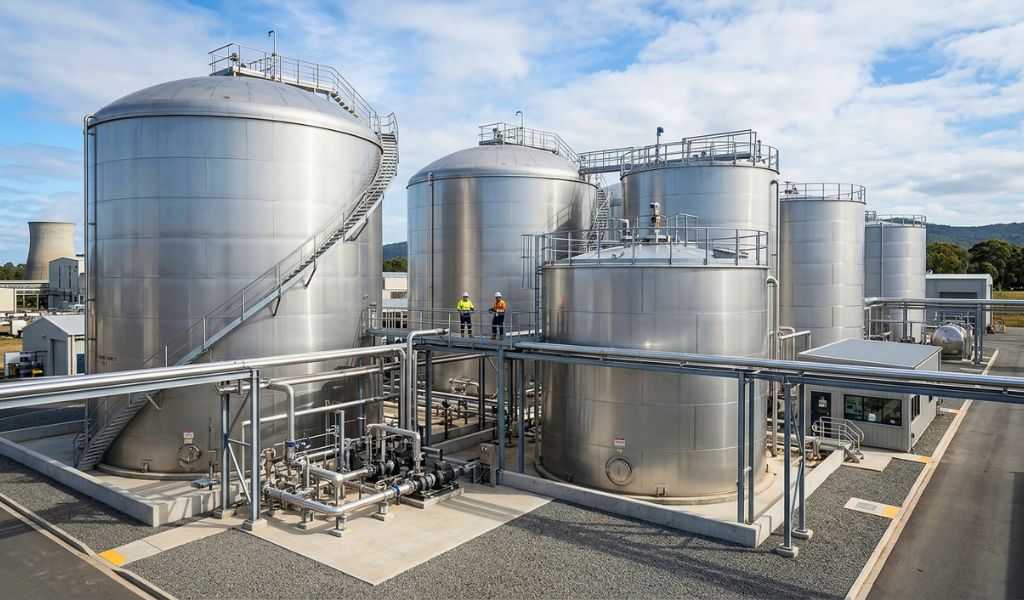
Steel provides a robust and reliable way to store significant amounts of water. Tanks that are designed correctly can fulfill the needs of rigorous commercial applications while optimizing all available space.
Steel is especially amenable for facilities needing greater capacities because tanks can be designed based on actual storage needs. Industrial water storage tanks may be designed differently depending on what they will take in, including process water, utility, and general supply.
Key benefits of steel tanks
Steel water tanks can offer:
-
High structural strength
-
Large storage capacity
-
Long-term durability when properly protected
-
Flexible design and fabrication options
-
Suitability for demanding commercial environments
What Size Steel Water Tank Does a Commercial Property Need?
The requisite size is determined mainly by daily consumption, peak demand definition, reliability of water supply, and storage purpose requirements.
A small office, for instance, may require much less capacity than that of a hotel or manufacturing plant/large warehouse. Emergency reserves, and interruptions to the incoming water supply are also prudent considerations.
A basic approach is:
Required capacity = Daily water demand × Required storage days + Reserve capacity
But real-world requirements may be very different. A professional evaluation can prevent both under-sizing and needless over-capacity.
Factors that affect tank size
Consider:
-
Number of employees, visitors, or occupants
-
Daily water consumption
-
Production or process requirements
-
Fire or emergency storage requirements
-
Available installation area
-
Expected supply interruptions
-
Future expansion plans
What Type of Steel is Best for Commercial Water Storage Tanks?
There is not one steel that will be the best fit for every application. The internal lining coat must take into consideration tank size, water type drinking water or wastewater, where the tanks will be placed, and design specification/requirements along with whatever corrosion protection is required.
Large fabricated tanks, on the other hand, are typically made of carbon steel since it has high strength and practicality. But where corrosion will be a problem, steel surfaces usually need appropriate protective systems.
When specifying the tank and protective coating system for projects in Saudi Arabia, it is important to take into consideration exposure to heat, dust, as well as other environmental conditions.
What Should I Consider When Buying a Commercial Water Storage Tank?
Purchasing a tank is not just as simple as picking some type of capacity. Both the design and fabrication quality, as well as installation conditions, may impact long-term performance.
1. Water storage requirements
Identify exactly what the tank will store and how frequently the water will be used. Drinking water, utility water, and industrial applications may have different technical requirements.
2. Tank dimensions and site conditions
Measure the proposed installation area carefully. Consider access for transportation, lifting, installation, and future maintenance.
3. Corrosion protection
Start by asking about steel grade, surface preparation, and protective coating or lining. An appropriate protection method can help to maximize the service life of your tank, especially in challenging conditions.
4. Structural design
The tank must be designed to carry at least the weight of volume-saturated water and foreseeable environmental loads. The base and support structure must also be fit for the installed work after completion.
5. Maintenance access
Aspects such as manholes, inspection taps, outlets and other fittings, and their arrangements can facilitate easier inspection in the future;
6. Manufacturer experience
Work with a manufacturer that understands commercial and industrial tank requirements. Afco Steel can help businesses assess suitable tank solutions according to their project requirements.
Practical Comparison: Which Tank Solution Fits Your Needs?
|
Application |
Typical Requirement |
Key Considerations |
Recommended Approach |
|
Small commercial property |
Moderate water demand |
Space and daily consumption |
Compact tank sized to actual usage |
|
Office or hotel |
Regular, higher demand |
Occupancy and peak consumption |
Larger commercial storage capacity |
|
Factory |
High or variable demand |
Process and utility requirements |
Engineered industrial tank |
|
Large facility |
Very high demand |
Capacity, foundation and access |
Large water storage tanks |
|
Emergency reserve |
Dedicated backup supply |
Required reserve volume |
Separate or integrated reserve capacity |
Design Features That Can Improve Tank Performance
An effectively designed tank must also be easy to manœuvre in, with the strength being suitable for its designated service.
Depending on the project, useful features may include appropriately positioned inlet and outlet connections, overflow arrangements, access openings, drain points, level monitoring and inspection provisions.
These specifics become even more vital for large storage tanks, as inspections and preventive measures can be trickier at larger capacities.
Think about future requirements
If a business is anticipated to grow, choosing a vessel solely based on current usage can prove restrictive down the line. If you build with a reasonable consideration of future demand, it can make your investment practical over the life cycle.
Also read: Why Are Steel Water Storage Tanks Better Than Other Water Storage Options?
Why Professional Tank Fabrication Matters?
Due to a fabricator's quality, it can affect the tank's strength, durability, and overall reliability of its function. The specification process should take into account welding, surface preparation, coating and fittings, and dimensional accuracy.
Experienced manufacturers can also help coordinate tank design with site requirements, foundation conditions and installation considerations. They are mostly helpful for businesses that compare steel water tank suppliers in Saudi Arabia when it comes to large commercial or industrial projects.
Conclusion
Choosing the right steel water storage tanks starts with understanding your property's water demand, required capacity, and installation conditions. Material selection, corrosion protection, structural design, and maintenance access are equally important for achieving reliable long-term performance.
Whether for business facilities requiring commercial water storage tanks or industrial water storage tanks suitable for a more demanding operation, the right engineered solution can offer reliable storage and effective management of your stored bulk fluid. Talk about your project requirements with an experienced manufacturer like Afco Steel, helping you pinpoint the right tank design and capacity.
FAQs on Steel Water Storage Tanks
1. How do I choose a steel water storage tank for commercial use?
Assess daily water consumption, peak demand, required reserve capacity, available space, steel specification, corrosion protection, and installation requirements before selecting a tank.
2. What size water tank does a commercial building need?
The required size depends on occupancy, daily consumption, operational requirements, and the number of days of backup storage required. Large facilities generally need greater capacity.
3. Are steel water tanks suitable for industrial applications?
Yes. Properly engineered steel tanks can provide strong and durable storage for various industrial water applications, subject to the appropriate material and protective specifications.
4. What should I check before buying a commercial water storage tank?
Check the tank capacity, steel specification, corrosion protection, structural design, fittings, maintenance access, installation requirements, and manufacturer's fabrication experience.