Selecting the right structural fabrication company is an important step in the successful completion of a construction or industrial project. From commercial buildings and warehouses to factories and large industrial facilities, the quality of fabricated steel components directly impacts structural strength, safety, and long-term performance.
There are many providers of structural steel fabrication and related services, so it can be difficult to know which company is the best fit for your requirements. The right partner should have the right technical expertise, reliable production capabilities, strict quality control, and timely delivery.
Whether you’re planning a new facility or expanding an existing one, understanding what to look for will help you make an informed decision and avoid unnecessary delays and expenses.
Quick Summary
-
Look for the company’s experience in similar projects to yours.
-
Assessing its engineering capabilities, equipment, and production capacity.
-
Confirm quality control procedures and compliance with applicable standards.
-
Examine safety procedures, project timelines, and communication at the workplace.
-
Compare the quotations on overall value, not just lowest price.
What Is Structural Fabrication and Why Does It Matter?
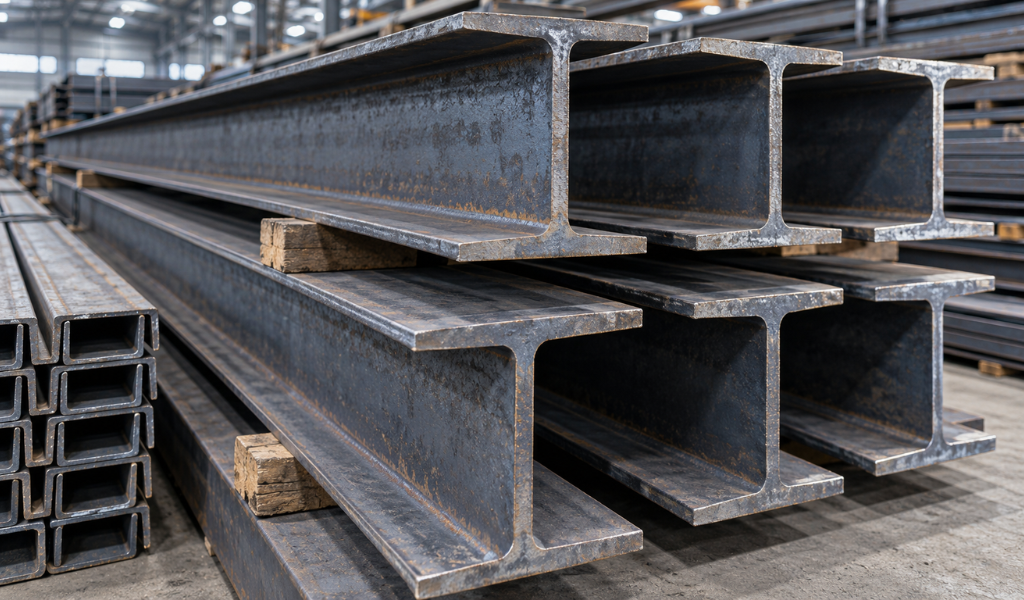
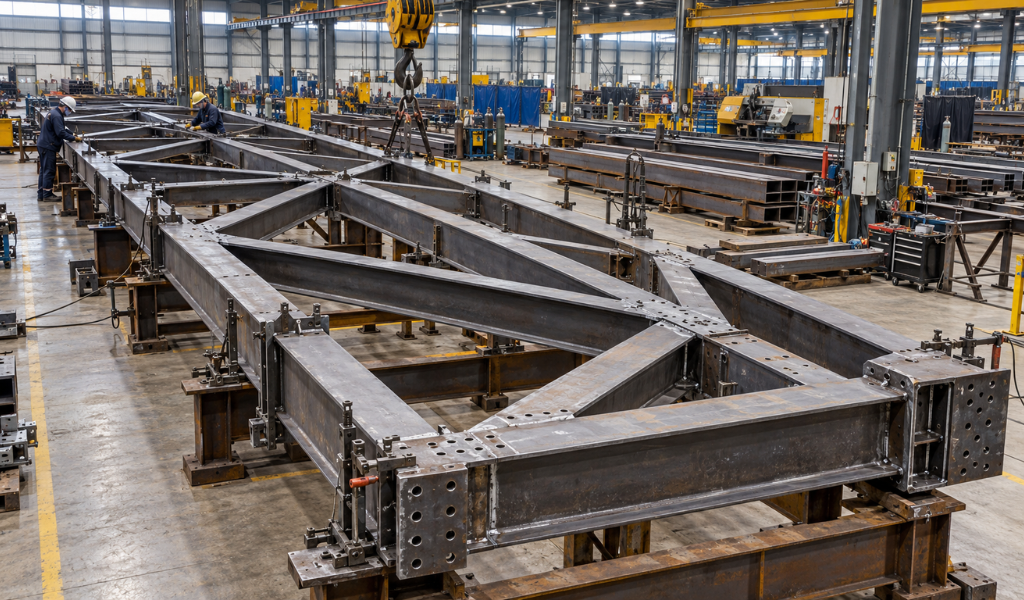
Structural fabrication involves the cutting, shaping, drilling, welding, and assembling of steel components to engineering drawings and project specifications. Some of these components include beams, columns, trusses, frames, platforms and other structural components that are used in construction and industrial applications.
Proper fabrication will ensure that each individual component will fit properly when installed. Poor workmanship, incorrect measurements, or inappropriate materials can result in expensive rework, installation difficulties, and possible safety issues.
Professional steel fabrication services provide project owners with consistent quality, better construction efficiency, and dependable structural performance.
Choosing an experienced fabricator is especially important for industrial developments, where projects often have complex designs, demanding load requirements, and strict delivery schedules.
7 Factors to Consider When Selecting a Structural Fabrication Partner
1. Industry Experience and Project Portfolio
Begin by considering the company’s experience in structural fabrication. A provider with a track record of working on similar projects will be more likely to understand your technical needs and be able to foresee any potential problems.
Request to view examples of finished projects that involve industrial plants, warehouses, commercial buildings, or other structures that are relevant to your needs.
Check out whether the company has experience with projects of similar size, complexity, and material specifications.
2. Engineering Expertise and Technical Capabilities
A good fabrication partner should be able to read engineering drawings, grasp design specifications and recognise fabrication requirements before the start of production.
Verify that the company has access to qualified technical personnel, appropriate design coordination processes and the equipment needed to manufacture components accurately.
Good technical skills can reduce mistakes, minimise waste of material and make installation easier.
3. Quality Control and Material Standards
Quality should be the focus throughout the manufacturing process, not just at the end of the line.
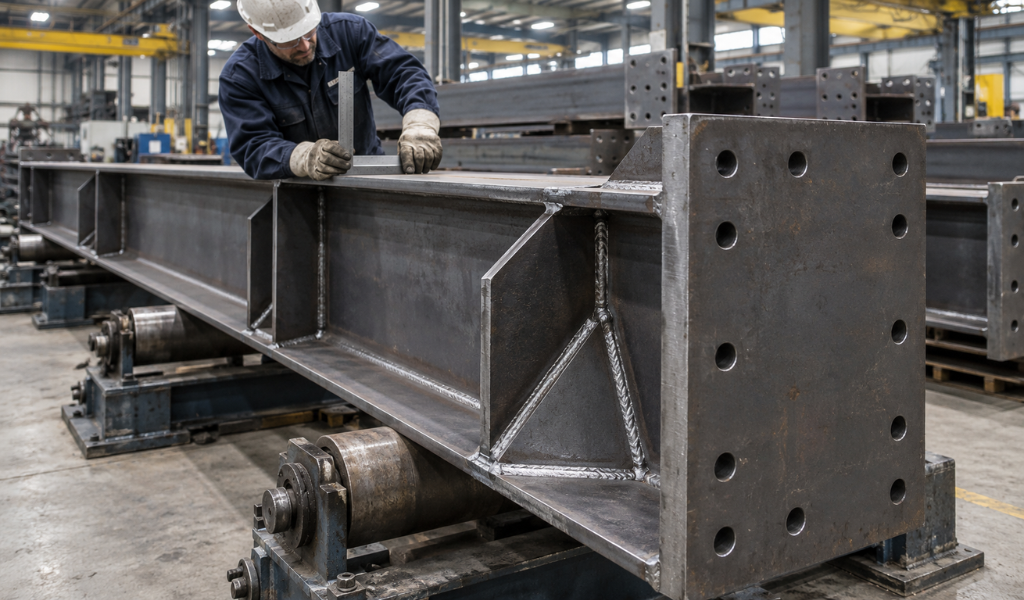
Enquire about how the company inspects incoming steel, checks dimensions, controls welding quality and inspects finished components. Relevant documentation may include material certificates, inspection reports and welding records, depending on the project.
Also check which recognised standards, certifications and inspection procedures apply to your project. Requirements may differ depending on structure, location and intended use.
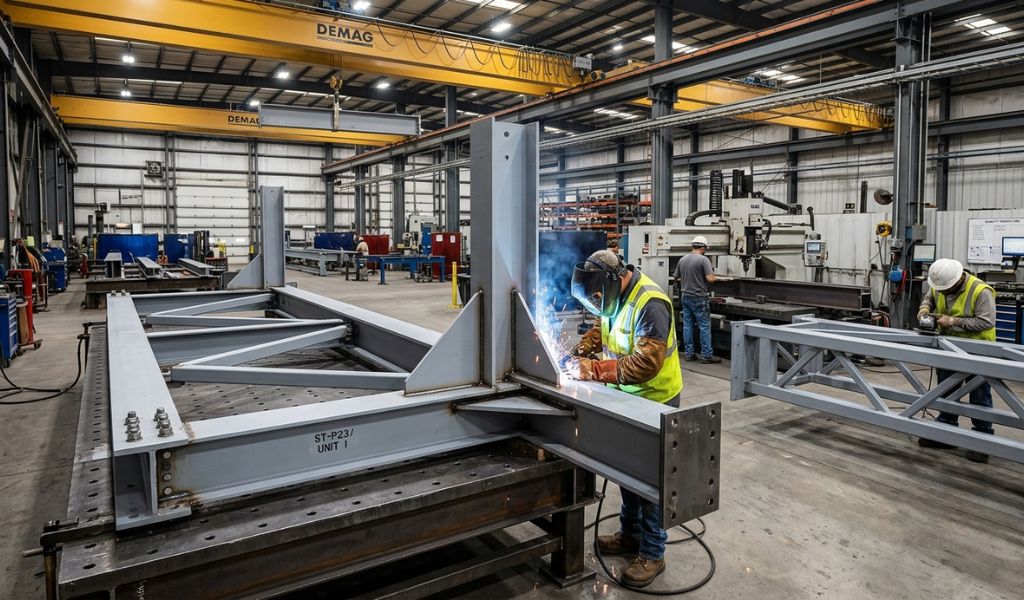
4. Production Capacity and Manufacturing Facilities
The company's facilities must be suitable for the scale and technical demands of your project.
Evaluate its cutting and welding machines, material handling systems, workshop space, and capability to handle multiple fabrication stages efficiently.
The manufacture of reliable steel structures requires coordinated production processes, accurate measurements, and adequate resources. Bottlenecks can occur if capacity is limited, particularly where large quantities of fabricated components are required to be delivered within a short period of time on a project.
5. Health, Safety and Compliance
The fabrication of steel includes the transportation of heavy materials, welding operations, machinery, and lifting activities. That’s why strong safety procedures are key.
Enquire about training for employees, maintenance of equipment, safety procedures in the workshop, and adherence to relevant health and safety laws.
For projects in Saudi Arabia, ensure that the company is familiar with the local requirements that apply to your project and can supply the necessary documentation.
6. Project Management and Delivery Reliability
Even high-quality fabricated parts can create problems if they arrive late or out of sequence.
Select a company that will provide a clear schedule for production, realistic delivery commitments, and regular updates on progress. It must also coordinate packaging, transport and delivery requirements in support of efficient installation at your site.
Discuss how design changes, unanticipated delays, and urgent requirements will be handled before signing an agreement.
7. Transparent Pricing and Overall Value
Cost is important, but the lowest quote is not always the most economical one.
Study the quotes closely to see what’s included by each provider. Material grades, fabrication complexity, finishing, inspection, transport, and installation support can all impact the final cost.
A good industrial steel fabrication supplier can help reduce errors, rework, and project delays and offer better long-term value.
Practical Comparison Table: How to Evaluate Fabrication Companies
Use this table to compare shortlisted providers before making your final decision.
|
Evaluation factor |
What to check |
Why it matters |
|
Experience |
Similar completed projects and client references |
Demonstrates relevant expertise |
|
Technical capability |
Engineering support, machinery and production processes |
Helps ensure accurate fabrication |
|
Quality assurance |
Material checks, welding inspections and documentation |
Supports safety and consistent quality |
|
Production capacity |
Workshop size, equipment and workforce |
Helps meet project demands |
|
Safety compliance |
Training, procedures and applicable certifications |
Reduces workplace risks |
|
Delivery planning |
Production schedules and transport arrangements |
Helps prevent construction delays |
|
Pricing |
Detailed quotation and clearly defined scope |
Makes cost comparisons more reliable |
Practical tip: Request comparable quotations based on the same drawings, material specifications, quantities, and delivery requirements. This makes it easier to identify differences in scope and value.
Questions to Ask Before Hiring a Structural Fabrication Company
Before making your decision, ask prospective providers a few direct questions:
-
Have you completed projects similar to ours?
-
What quality checks do you perform during fabrication?
-
Can you meet our required production and delivery schedule?
-
What technical documents and inspection records will you provide?
-
Which services are included in your quotation?
-
How do you manage design revisions and unexpected production issues?
The answers should give you a clearer picture of the company's capabilities, communication practices, and suitability for your project.
Also read: Where Can I Find Reputable Steel Fabricators for Industrial Projects in Jeddah?
Why Choose an Experienced Steel Fabrication Partner?
A good fabrication partner will do more than just fabricate steel. It helps coordinate technical requirements, maintain quality throughout production, and deliver materials on the project schedule.
Afco Steel offers steel fabrication solutions in Saudi Arabia for projects that demand reliable manufacturing capabilities and focus on project specifications. For any provider you evaluate, discuss your drawings, quantities, material needs, and delivery expectations to ensure their services meet your objectives.
Taking time to consider these details before selecting a fabricator can help mitigate uncertainty and lead to a more seamless construction process.
Conclusion
Choosing the right structural fabrication company is a process that calls for careful consideration of experience, technical expertise, quality control, production capacity, safety, delivery reliability, and pricing. Each factor is important to determine if a provider can meet your project requirements efficiently and consistently.
Don't just choose the cheapest option, but rather look for a company that can provide accurate fabrication, reliable service, and straightforward communication. A well-suited fabrication partner can help minimise rework, control project risks and support long-term structural performance.
If you are planning a construction or industrial project in Saudi Arabia, explore suitable structural fabrication providers and discuss your specifications with their teams before committing.
FAQs on Structural Fabrication Company
1. What does a structural fabrication company do?
A structural fabrication company manufactures steel components such as beams, columns, trusses, and frames by cutting, shaping, drilling, welding, and assembling steel according to engineering drawings and project specifications.
2. How do I choose the best structural fabrication company?
Evaluate the company's relevant experience, technical capabilities, quality assurance procedures, production capacity, safety practices, delivery record, and quotation details. Ask for project references and documentation before making your decision.
3. What is the difference between structural steel fabrication and steel manufacturing?
Structural steel fabrication focuses on converting steel sections and plates into project-specific components through cutting, welding, and assembly. Steel manufacturing is a broader term that can include producing steel materials themselves, as well as other manufacturing processes.
4. How much do steel fabrication services cost?
The cost depends on the steel grade, material quantities, design complexity, fabrication processes, finishing requirements, inspection needs, transport, and installation scope. Request a detailed quotation based on your project specifications for an accurate estimate.