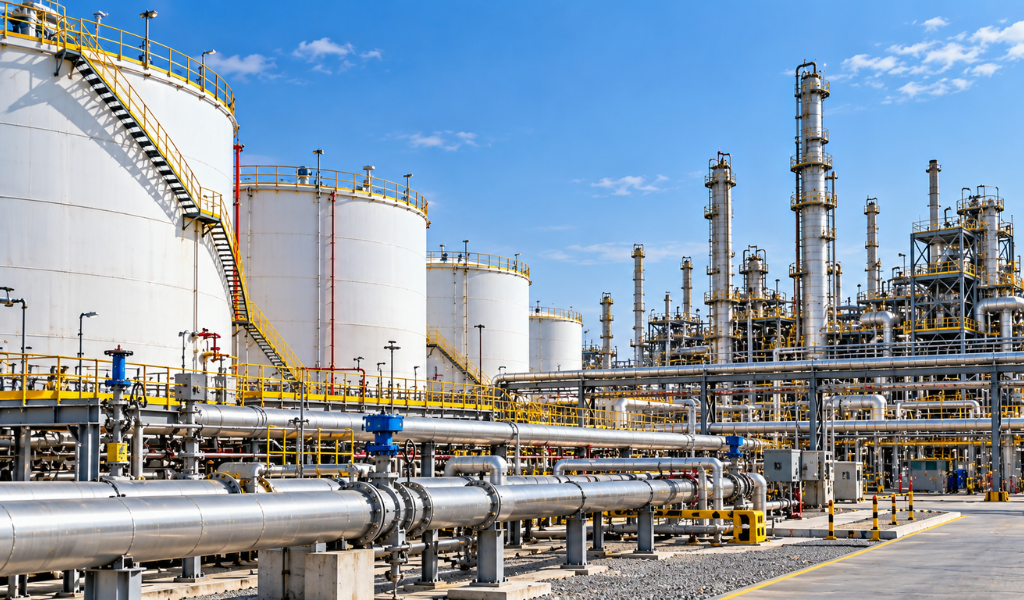
Storage tanks are a critical component of the oil and gas infrastructure, used to safely store crude oil, refined petroleum products, process liquids, and other industrial materials. They help facilities cope with supply variations, maintain continuity of operations, and safely handle materials throughout the production and distribution process.
Oil and gas operations represent a significant portion of the industrial sector in Saudi Arabia, and the selection of the right storage solutions constitutes a major investment. Well-designed steel storage tanks can withstand demanding operating conditions, improve storage efficiency, and contribute to long-term infrastructure reliability. Knowing how they are used, what it takes to build them, and how to keep them in good shape helps companies make smart decisions.
Quick Summary
-
Storage tanks are necessary for the storage of oil, liquids associated with gas, water, and industrial materials.
-
Steel storage tanks offer strength, durability, and flexibility for a wide range of storage applications.
-
Good tank design helps to control operating risks and protects the materials being stored.
-
The choice of materials, operating conditions, and applicable safety requirements must be considered in the fabrication of industrial tanks.
-
Regular checking and maintenance prolong service life and ensure reliable operation.
Importance of Industrial Storage Tanks in the Oil and Gas Industry
Storage tanks provide a link between the activities of production, processing, transportation, and distribution. If storage capacity is not sufficient, facilities may have difficulty coping with changes in production levels, delivery schedules, or temporary interruptions.
Supporting Continuous Operations
Facilities that produce oil and gas often operate continuously, around the clock, seven days a week. Storage capacity allows operators to keep materials until they are required for processing, transportation, or distribution. This flexibility can help reduce reliance on immediate deliveries and maintain a consistent workflow.
Managing Supply and Demand
Production volumes and market demand do not always match. Storage tanks give businesses a buffer that allows them to better control inventories, schedule deliveries, and respond to operational changes.
Improving Material Handling
Production volumes and market demand do not always match. Storage tanks give businesses a buffer that allows them to better control inventories, schedule deliveries, and respond to operational changes.
Why Choose Steel Storage Tanks for Industrial Applications?
Steel provides structural strength and can be fabricated into different shapes, capacities, and configurations. Steel storage tanks are widely used throughout industrial facilities.
Strength and Durability
Steel can hold significant structural loads if the tank is well designed and manufactured. Its suitability depends on variables such as material grade, tank geometry, wall thickness, foundation conditions, and operating requirements.
Protective coatings, appropriate linings and corrosion-control measures can help minimise deterioration, especially in environments where moisture, chemicals or saline conditions can affect the tank.
Flexible Design Options
Different storage arrangements are required in different facilities. Steel tanks can be manufactured to meet engineering requirements for specific capacities, installation locations and operating conditions.
Depending on the application, a project may require atmospheric storage or a tank with specialised internal protection or a pressure-rated vessel. These applications are not interchangeable and therefore design must match the stored material and operating conditions.
Long-Term Value
A correctly specified tank will provide long and reliable service. By considering fabrication quality, inspection access, corrosion protection, and maintenance requirements at the design stage, businesses are able to assess total lifecycle costs rather than simply the initial purchase price.
Applications of Industrial Storage Tanks in Saudi Arabia
Industrial storage tanks are used throughout the construction and manufacturing sectors of the Kingdom for a variety of purposes.
-
Crude oil and petroleum products: Storage before processing, blending or distribution, where the tank design is suitable for the product.
-
Industrial liquids: Containment of compatible process liquids and other materials used in manufacturing.
-
Water storage: Supply for industrial processes, utility services, firefighting systems and other approved applications.
-
Wastewater and effluent: Temporary or operational storage where materials, coatings and containment arrangements are suitable.
-
Supporting oil and gas facilities: Storage infrastructure for operational liquids and associated utility requirements.
Companies in Saudi Arabia who are looking for water storage tanks need to consider water quality, intended use, site conditions, and corrosion protection. Suitable approved materials and linings may be required for potable water applications, and firefighting and process-water systems have their own capacity and performance requirements.
What Should Industrial Tank Fabrication Include?
Industrial tank fabrication is more than simply cutting and assembling steel plates. It involves coordinated planning of engineering, manufacturing, inspection, and installation.
Material Selection and Engineering
The design process shall identify the substance to be stored, the required capacity, operating temperature, pressure conditions, environmental exposure, and applicable design standards. These factors are used to decide the material selection, plate thickness, structural details and protective systems.
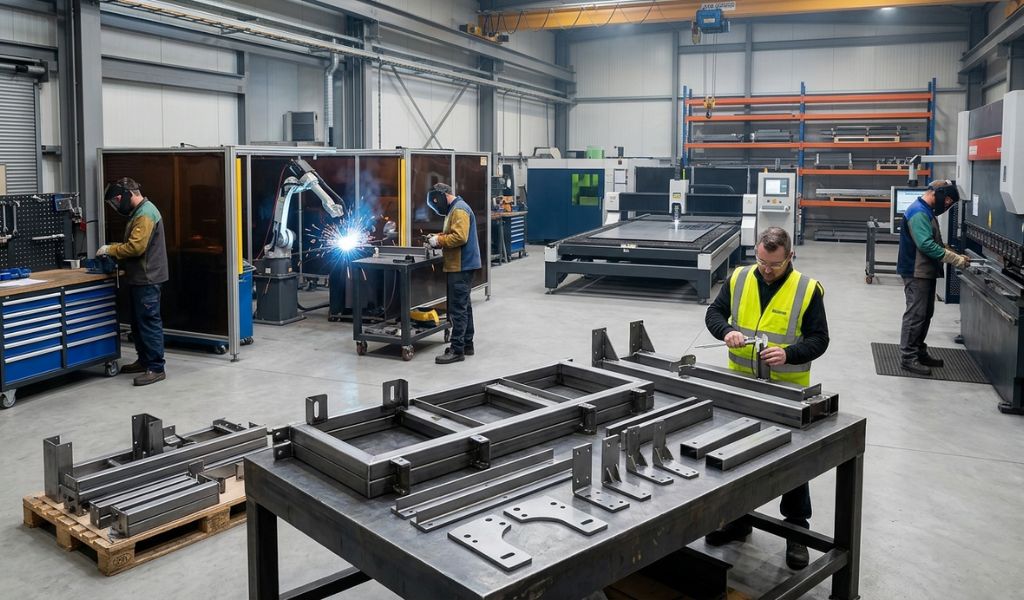
Welding and Quality Control
Quality of welding is critical to tank strength and containment integrity. Proper welding procedures, qualified personnel where required, dimensional checks, and specified inspection or non-destructive testing can help to assure that the fabrication will meet project requirements.
Surface Preparation and Corrosion Protection
Surface preparation and coating selection should be appropriate to the operating environment and material being stored. In Saudi Arabia, the design must take due account of suitable corrosion protection because of the exposure to heat, dust and coastal salinity in some places.
Installation and Inspection
Tank foundations, access arrangements, connections, and installation tolerances need to be considered prior to commissioning. Inspection and testing shall be performed as per applicable design code, project specifications and relevant safety requirements.
Afco Steel helps industrial projects with steel storage tank solutions tailored to the needs of the project. Businesses can talk through their capacity requirements, application, and site conditions to determine the right approach.
Practical Comparison: Which Storage Tank Solution Is Suitable?
|
Application |
Recommended consideration |
Key factor to assess |
|
Crude oil storage |
Purpose-designed steel tank |
Product properties, capacity and applicable design code |
|
Refined petroleum products |
Compatible steel storage system |
Vapour control, fire safety and corrosion protection |
|
Industrial process liquids |
Application-specific industrial storage tank |
Chemical compatibility and operating conditions |
|
Water storage |
Suitable steel water tank |
Water quality, lining and intended use |
|
Firefighting water |
Dedicated water storage system |
Required reserve capacity and applicable fire-safety requirements |
|
Coastal industrial facilities |
Steel tank with an appropriate protection system |
Salinity, coating performance and inspection access |
The final selection should be based on an engineering assessment rather than the application name alone. Tank dimensions, foundations, accessories, testing and maintenance provisions should all be considered before procurement.
Also read: How Do Steel Storage Tanks Withstand Saudi Arabia's Hot Climate?
How Can Businesses Maintain Storage Tanks?
The structured maintenance program helps to identify deterioration before it becomes a major operational problem.
Recommended practices include:
-
Inspecting external surfaces for corrosion, coating damage and visible deformation.
-
Checking foundations, supports, connections and accessible weld areas.
-
Monitoring for leaks and investigating unusual changes in stored material levels.
-
Maintaining vents, valves, gauges and other accessories according to manufacturer recommendations.
-
Arranging internal inspections and suitable testing at intervals determined by the applicable code, risk assessment and operating conditions.
-
Keeping inspection reports, repairs and maintenance records up to date.
The frequency of inspection should be in accordance with tank design, service conditions, material stored and applicable regulations. Any necessary repairs must be performed by qualified personnel, using approved procedures.
Conclusion
Storage tanks are an essential component of reliable oil and gas infrastructure, supporting inventory management, material handling, and operations continuity across industry. Selecting the correct steel storage tanks calls for careful consideration of engineering design, fabrication quality, corrosion protection, and routine inspection.
Collaborating with a reputable steel fabrication company in Saudi Arabia enables businesses to understand project requirements better and find the relevant storage solution. Contact Afco Steel to discuss your industrial storage needs, your required capacity, and your project specifications.
FAQs on Steel Storage Tanks
1. Why are storage tanks important in the oil and gas industry?
Storage tanks hold crude oil, petroleum products, process liquids, and other materials between production, processing, and distribution stages. They help manage inventory and support operational continuity.
2. What are the benefits of steel storage tanks?
Steel storage tanks offer structural strength, adaptable configurations, and suitability for many industrial applications. Their performance depends on proper engineering, fabrication, corrosion protection, and maintenance.
3. How do I choose the right industrial storage tank?
Assess the stored material, required capacity, operating temperature and pressure, installation environment, applicable standards, foundation requirements, and maintenance access before selecting a tank.
4. What should I consider when buying water storage tanks in Saudi Arabia?
Consider the intended water use, storage capacity, material compatibility, protective lining, environmental exposure, foundation design, and applicable quality or safety requirements.