Structural steel is one of the most widely used materials for modern construction due to its strength, durability, and versatility. It provides the structural support required to build everything from commercial buildings and warehouses to industrial facilities and large-scale infrastructure safely and reliably.
Selection of the right type of steel is necessary to ensure the needed load-bearing capacity, design flexibility, and long-term performance. Depending on the project requirements, building design, and environmental conditions, steel sections are used for different purposes. Understanding the options available will assist construction professionals in making informed choices regarding structural steel construction, especially for demanding projects in Saudi Arabia.
Quick Summary
-
Structural steel is available in several shapes and grades to suit different construction requirements.
-
I-beams, H-beams, channels, angles, and hollow sections are commonly used in construction.
-
Each steel section offers specific advantages in terms of strength, stability, and design flexibility.
-
Proper structural steel fabrication ensures dimensional accuracy and reliable connections.
-
Selecting suitable materials helps improve the safety, durability, and performance of steel structures.
What Are the Common Types of Structural Steel?
Structural steel is manufactured in different shapes and grades to meet specific engineering and construction requirements. The most common types include the following.
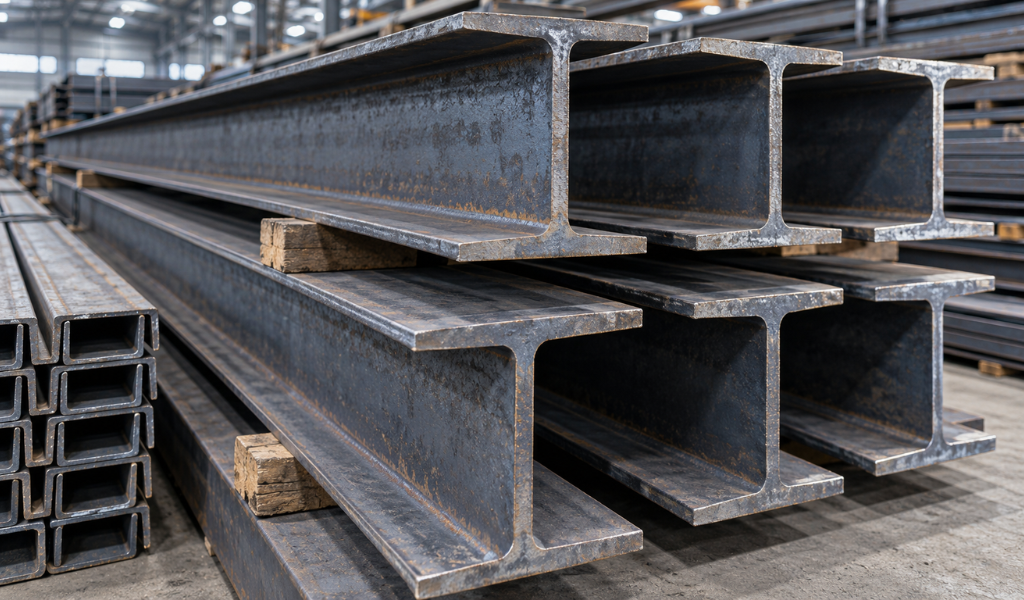
1. I-Beams
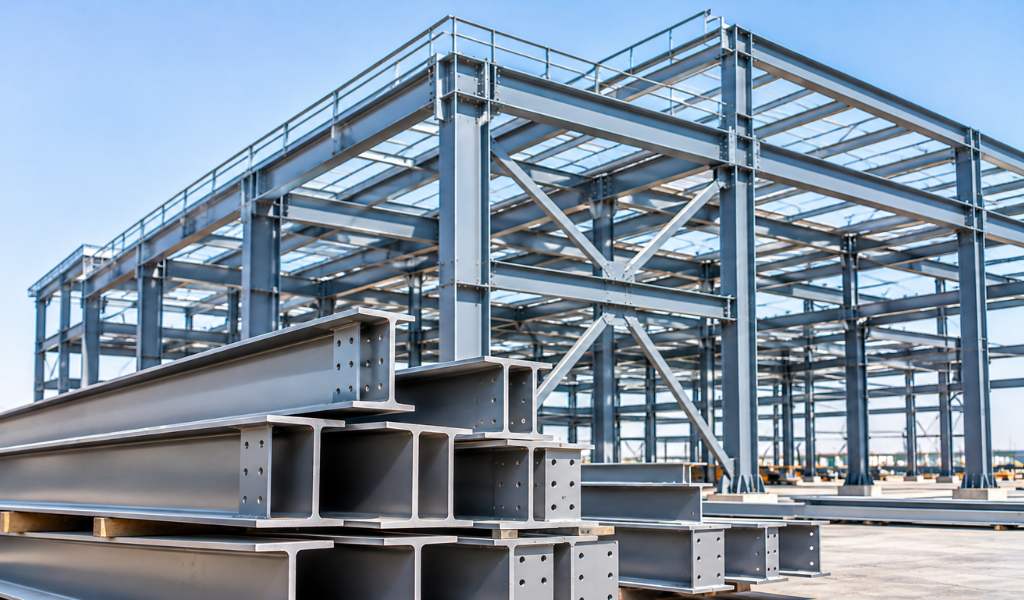
I-beams have a distinctive cross-section consisting of two horizontal flanges connected by a vertical web. They are designed to resist bending forces and support substantial loads.
Common applications:
-
Commercial and industrial buildings
-
Roof and floor support systems
-
Bridges and infrastructure
-
Warehouse frameworks
Their efficient design makes them a practical choice for projects requiring reliable load distribution.
2. H-Beams
H-beams have wider and generally thicker flanges than many conventional I-beam sections. Their shape provides excellent load-bearing capabilities, making them suitable for heavy structural applications.
Common applications:
-
Industrial buildings
-
Heavy-duty structural frameworks
-
Multi-storey buildings
-
Large-span construction projects
H-beams are particularly useful where structural stability and substantial load resistance are important.
3. Structural Steel Channels
Steel channels feature a C-shaped cross-section, with a web and two flanges. They are commonly used as supporting members and secondary structural components.
Common applications:
-
Roof framing
-
Wall supports
-
Building frameworks
-
Equipment platforms
Their adaptable shape makes them suitable for various fabrication and construction requirements.
4. Steel Angles
Steel angles have an L-shaped cross-section and are available in equal and unequal dimensions. They are often used to connect structural members and provide additional reinforcement.
Common applications:
-
Bracing systems
-
Structural connections
-
Support frames
-
Industrial platforms
Steel angles offer flexibility and are relatively straightforward to incorporate into fabricated structures.
5. Hollow Structural Sections (HSS)
Hollow structural sections are available in square, rectangular, and circular profiles. Their closed cross-section provides good strength and resistance to torsional forces.
Common applications:
-
Industrial steel structures
-
Building columns
-
Roof trusses
-
Equipment support frames
Hollow sections are also valued for their clean appearance and suitability for architectural applications.
6. Steel Plates and Flat Bars
Steel plates and flat bars are versatile materials used in fabrication, reinforcement, and connection assemblies. They can be cut, drilled, welded, and shaped to meet specific engineering requirements.
Common applications:
-
Base plates and connection plates
-
Structural reinforcements
-
Machinery supports
-
Fabricated components
Their versatility makes them essential materials in many structural steel fabrication processes.
How to Choose the Right Structural Steel for Your Project?
Selecting the appropriate steel section requires more than comparing shapes and dimensions. Engineers and construction professionals should consider several important factors.
Load-Bearing Requirements
Understand the expected dead loads, live loads, wind loads, and other project-specific forces. The selected steel section must meet the structural design requirements.
Environmental Conditions
Projects in Saudi Arabia may experience high temperatures, dust, and challenging environmental conditions. Material selection, protective coatings, and corrosion-control measures should reflect the intended operating environment.
Design and Construction Requirements
Consider building dimensions, required spans, connection details, and architectural requirements. The right section should support the overall design without unnecessary material use.
Fabrication and Installation
Choose steel sections that can be fabricated, transported, and installed efficiently. Accurate measurements, suitable welding procedures, and appropriate quality checks are essential.
Comparison of Common Structural Steel Types
The following table provides a practical overview to help identify suitable steel sections for different construction applications.
|
Steel Type |
Main Characteristics |
Common Applications |
|
I-Beams |
Efficient bending resistance |
Floors, roofs and bridges |
|
H-Beams |
High load-bearing capacity |
Industrial buildings and columns |
|
Steel Channels |
C-shaped, versatile profile |
Supports and roof framing |
|
Steel Angles |
L-shaped reinforcement |
Bracing and connections |
|
Hollow Sections |
Closed profiles with good torsional resistance |
Columns, trusses and frames |
|
Steel Plates |
Flat, adaptable material |
Base plates and connections |
The final selection should always be based on engineering calculations, applicable design standards, and project specifications.
Also read: How to Choose the Right Structural Fabrication Company for Your Project?
Why Is Structural Steel Important for Construction in Saudi Arabia?
The growing demand for commercial, industrial, and infrastructure development has increased the importance of reliable steel structures in Saudi Arabia.
Structural steel offers several advantages for these projects:
-
Strength and durability: Supports demanding structural applications when properly designed and maintained.
-
Design flexibility: Allows engineers to develop different building configurations and large-span structures.
-
Faster construction: Off-site fabrication can help reduce on-site work and improve installation planning.
-
Adaptability: Suitable for warehouses, factories, workshops, and industrial facilities.
-
Long-term value: Appropriate material selection and protective treatments can support extended service life.
For industrial developments, selecting the right materials and fabrication approach is particularly important for achieving dependable results.
The Role of Structural Steel Fabrication in Building Performance
Choosing good steel is only part of a successful construction project. Structural steel fabrication also has an equally important role in ensuring individual components meet design specifications.
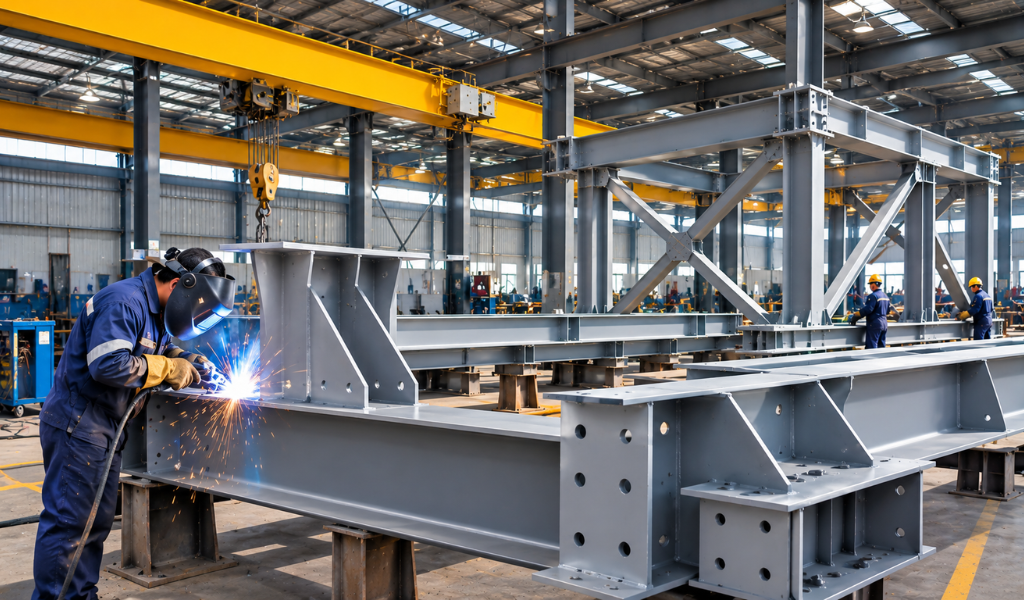
The manufacturing process normally involves cutting, drilling, welding, forming,g and assembling steel sections. Each step calls for meticulous planning and quality control to ensure dimensional accuracy and connection integrity.
Construction companies can work with an experienced fabrication partner to achieve consistent workmanship, smoother installation, and reliable structural performance.
Afco Steel supports steel structure requirements with an emphasis on practical engineering, fabrication quality, and project-specific solutions.
Conclusion
Understanding the common types of structural steel helps construction professionals select suitable materials for different building and industrial applications. From I-beams and H-beams to channels, angles, and hollow sections, each type provides specific advantages according to the needs of the structure.
Good engineering, accurate fabrication, and proper environmental protection have to be matched with the selection of materials for successful structural steel construction. If you’re planning an industrial facility, warehouse, or commercial development, consider working with an experienced steel solutions provider to identify the right approach for your project.
FAQs on Structural Steel
1. What are the most common types of structural steel?
The most common types include I-beams, H-beams, steel channels, steel angles, hollow structural sections and steel plates. Each type serves different structural and fabrication purposes.
2. Which structural steel is best for industrial buildings?
H-beams, I-beams, and hollow structural sections are commonly used in industrial buildings. The best option depends on load requirements, building dimensions, structural design, and intended use.
3. What is the difference between I-beams and H-beams?
I-beams generally have narrower flanges, while H-beams have wider flanges and a more balanced cross-section. H-beams are often selected for heavy-duty applications, while I-beams are commonly used for bending resistance.
4. Why is structural steel fabrication important?
Structural steel fabrication converts raw steel sections into components that meet specific engineering requirements. Accurate cutting, welding, drilling and assembly help ensure proper fit, connection quality and structural reliability.