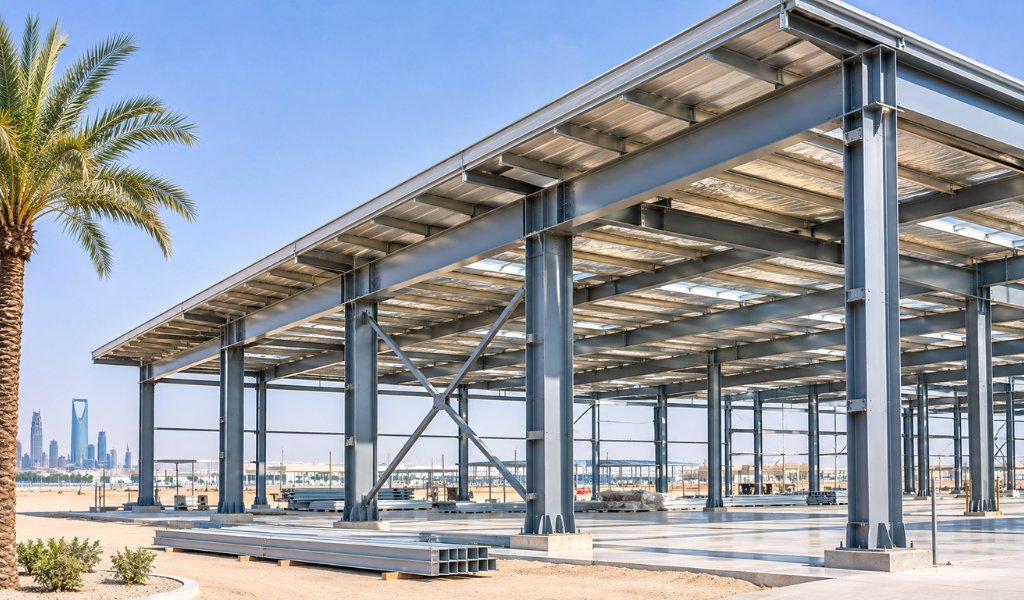
Designing steel structures in Saudi Arabia calls for careful consideration of the country’s hot climate, intense solar radiation, and challenging environmental conditions. High temperatures can influence the performance of materials, thermal expansion, and the long-term durability of buildings. Thus, the local climate conditions should be taken into account in the design of steel structures from the very early planning stages.
The choice of suitable materials and engineering solutions is essential when developing an industrial facility, warehouse, factory, or commercial building. If properly designed, a structure can accommodate thermal movement, maintain structural integrity and minimise long-term maintenance requirements.
Quick Summary
-
Consider thermal expansion when designing steel connections and structural components.
-
Select appropriate steel grades and protective coatings for local environmental conditions.
-
Incorporate ventilation and shading to reduce internal heat build-up.
-
Use suitable corrosion protection to improve structural durability.
-
Work with experienced engineering professionals to achieve safe and practical designs.
Why Does Saudi Arabia's Climate Matter in Steel Structure Design?
Saudi Arabia has long hot seasons, high daytime temperatures, and strong sunlight. Humidity, airborne salts, and dust can be additional challenges in coastal and industrial areas.
These conditions influence several aspects of structural performance:
-
Thermal expansion: Steel expands when heated and contracts when temperatures decrease. Structural components must accommodate this movement.
-
Material performance: Temperature conditions should be considered when selecting materials and evaluating structural requirements.
-
Corrosion risks: Humidity and coastal exposure can accelerate corrosion if protective measures are inadequate.
-
Indoor comfort: Poor ventilation and inadequate insulation can increase heat accumulation inside steel buildings.
Addressing these factors early helps create structures that remain functional, safe, and durable throughout their service life.
Key Factors to Consider in Steel Structure Design for Hot Climates
1. Choose Suitable Steel Grades and Materials
The material selection is one of the most important parts of steel structure engineering. The steel selected must meet the loading requirements of the project, the design specifications, and the environmental exposure conditions.
Engineers should evaluate:
-
Required strength and ductility.
-
Temperature-related material behaviour.
-
Structural loading and connection requirements.
-
Availability of suitable protective treatments.
By selecting materials according to engineering calculations rather than simply based on price, long-term project performance can be enhanced.
2. Account for Thermal Expansion and Movement
Steel parts expand when they are heated. Temperature differences can cause significant dimensional changes in large industrial buildings, warehouses, and manufacturing facilities.
Effective structural steel design services should consider:
-
Expansion joints where appropriate.
-
Flexible connection arrangements.
-
Suitable bearing and support details.
-
Temperature-related movement in long-span structures.
These measures help prevent unnecessary stress on structural connections and supporting components.
3. Use Effective Insulation and Ventilation
Managing indoor temperatures is essential for buildings used by employees, machinery, and industrial equipment.
Consider the following design solutions:
-
Install suitable roof and wall insulation.
-
Use reflective roof finishes to reduce solar heat absorption.
-
Incorporate natural ventilation where practical.
-
Provide mechanical ventilation for facilities with high internal heat loads.
-
Consider shading systems around exposed building elevations.
Combining these measures can improve indoor conditions and support more efficient building operations.
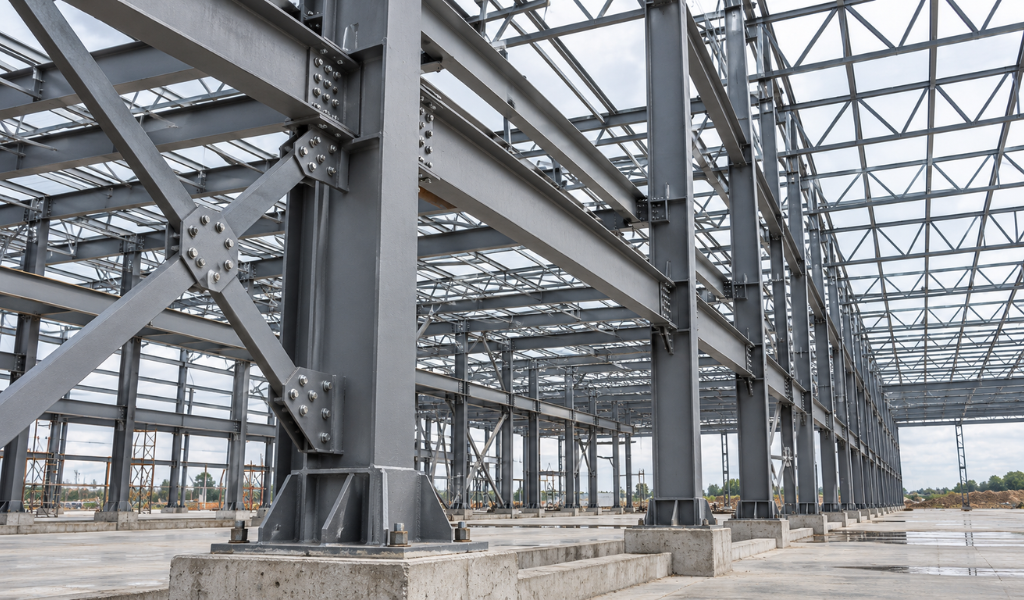
4. Apply Appropriate Corrosion Protection
High temperatures are a big consideration, but don’t forget about corrosion protection, especially in coastal and industrial locations.
Depending on the exposure conditions, suitable protection may include:
-
Hot-dip galvanising.
-
Industrial-grade protective paint systems.
-
Appropriate surface preparation.
-
Protective coatings for exposed steel connections.
-
Planned inspection and maintenance schedules.
The coating system should be selected according to the project's environmental exposure and expected service conditions.
How Industrial Steel Building Design Solutions Improve Performance?
Modern steel building design solutions combine structural efficiency with practical environmental considerations. For factories, warehouses, processing facilities, and other industrial applications, the design must accommodate operational requirements as well as external conditions.
Important considerations include:
Structural Layout and Load Distribution
A suitable structural arrangement helps distribute dead loads, live loads, wind loads, and other applicable forces. Engineers should also consider roof equipment, cranes, suspended services and future expansion requirements.
Roof and Building Orientation
Building orientation can influence direct solar exposure. Where site conditions permit, the layout should minimise excessive heat gain while maintaining operational access and functional space.
Long-Span Structural Systems
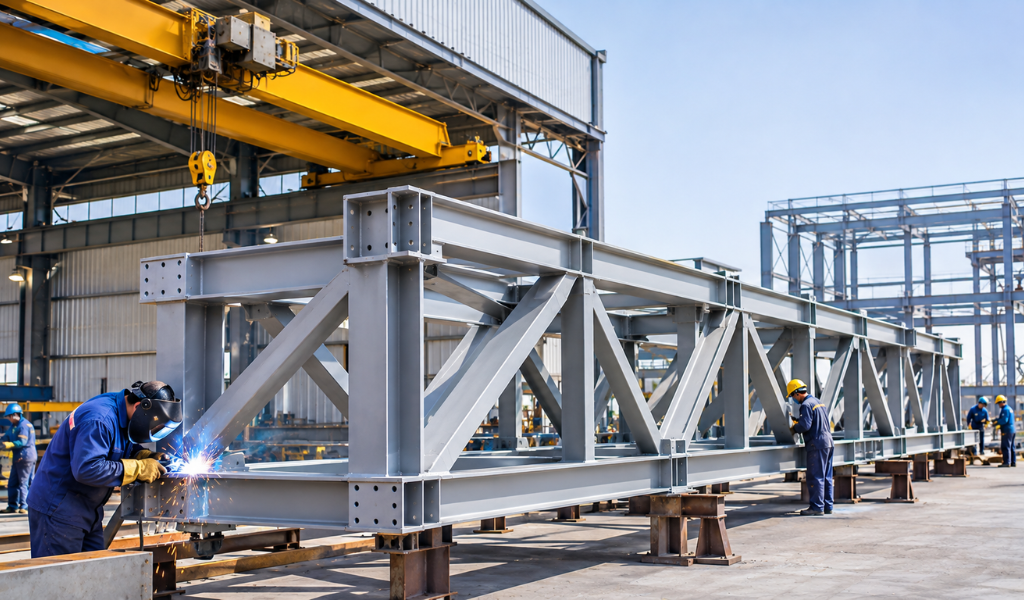
Industrial buildings often require large, column-free spaces. Properly engineered portal frames, trusses and other structural systems can provide practical solutions while meeting applicable design requirements.
Practical Recommendations for Steel Structures in Saudi Arabia
The following table highlights key design considerations and their recommended approaches.
|
Design consideration |
Recommended approach |
Main benefit |
|
Thermal expansion |
Allow for movement through suitable joints and connections |
Reduces thermal stress |
|
Material selection |
Specify suitable structural steel grades |
Supports structural reliability |
|
Roof heat absorption |
Use reflective finishes and insulation |
Helps manage indoor temperatures |
|
Corrosion protection |
Select suitable coatings or galvanising |
Improves durability |
|
Ventilation |
Integrate natural or mechanical ventilation |
Supports indoor comfort |
|
Structural loading |
Account for wind, equipment, and operational loads |
Improves structural safety |
|
Maintenance |
Plan regular inspections and coating checks |
Helps extend service life |
Also read: Where to Find Steel Structure Design Services Near Jeddah?
Why Choose Professional Structural Steel Design Companies in Saudi Arabia?
Working with experienced structural steel design companies in Saudi Arabia can help businesses address local construction requirements and project-specific engineering challenges.
A professional engineering partner should understand:
-
Local climatic and environmental conditions.
-
Applicable Saudi building regulations and relevant design standards.
-
Structural analysis and load calculations.
-
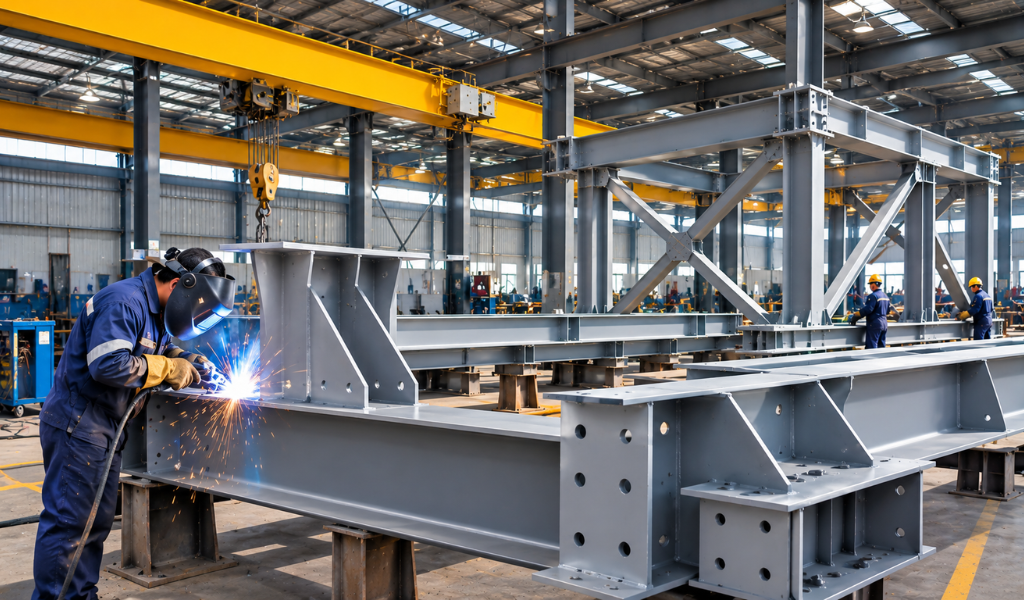
Fabrication and installation requirements.
-
Material specifications and corrosion protection.
-
Coordination between design, fabrication and construction teams.
Afco Steel provides structural steel design and engineering solutions for projects requiring practical, carefully planned steel structures. Its approach focuses on engineering requirements, structural performance, and project-specific considerations.
Conclusion
Designing a steel structure in Saudi Arabia is not simply a matter of choosing the strongest materials. To create dependable buildings in challenging environments, engineers must consider thermal expansion, exposure to solar heat, ventilation, protection from corrosion, and structural loading.
From industrial buildings to warehouses and large steel buildings, the right engineering approach can improve safety, durability, and operational performance. With an experienced steel engineering partner like Afco Steel, project requirements can be translated into practical solutions for structures.
Looking for dependable steel structure design and engineering support in Saudi Arabia? Explore Afco Steel's services to discuss your project's requirements.
FAQs on Steel Structures
1. How does hot weather affect steel structures in Saudi Arabia?
High temperatures cause steel to expand, while temperature changes can create movement within structural components. Solar exposure can also increase indoor heat, making thermal management an important design consideration.
2. What is the best steel structure design approach for hot climates?
The best approach combines suitable material selection, thermal expansion allowances, effective insulation, ventilation, and appropriate corrosion protection based on the project's location and operating conditions.
3. Why is thermal expansion important in steel structure engineering?
Steel expands when heated and contracts when cooled. If this movement is not considered, additional stresses can develop in connections, supports, and other structural components.
4. How can industrial steel buildings stay cooler in Saudi Arabia?
Industrial buildings can manage heat through roof insulation, reflective coatings, suitable building orientation, shading, and properly designed ventilation systems.