Strong buildings and industrial facilities are built on reliably engineered steel components. Structural fabrication takes raw steel and makes it into beams, columns, frames and other components that can be put together in a safe and reliable way. In Saudi Arabia, the rigours of a demanding construction environment and large-scale industrial projects require consistent quality, and partnering with an experienced fabricator can make all the difference.
A good provider must be technically competent, have modern equipment, have strict quality control, and be able to meet the specifications of the project. Whether structural steel fabrication for a commercial facility or industrial steel fabrication for a large-scale project, the right partner will help improve efficiency, reliability, and long-term performance.
Quick Summary
-
Evaluate the provider’s fabrication experience and technical capabilities.
-
Look for good quality-control and inspection procedures.
-
Verify that materials and fabrication methods are consistent with project specifications.
-
Experience with custom steel fabrication and complex structures.
-
Look for a company that can provide reliable project support and delivery.
How does structural fabrication improve steel strength?
Good structural fabrication is more than just cutting steel and putting it together. Accurate fabrication helps to ensure that components are produced to the approved engineering drawings and to the required tolerances.
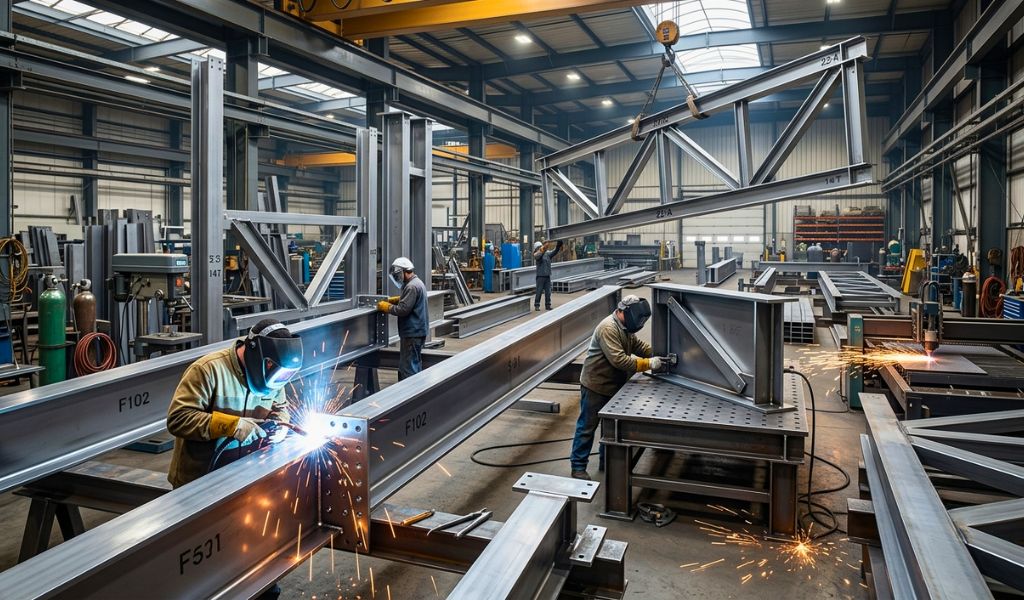
Accurate cutting, drilling, welding and finishing can get rid of weak points and prevent problems during assembly. Professional structural steel fabrication also ensures that connections between beams, columns and other components are properly prepared.
This leads to a steel structure with better consistency of performance under anticipated loads and environmental conditions.
What are the benefits of structural steel fabrication?
Professional structural steel fabrication can help with construction and industrial projects in many practical ways.
Improved accuracy
Modern fabrication equipment can cut and prepare steel components with a high degree of repeatability.
Faster installation
Factory fabrication means many parts are ready to be assembled at the site, which helps to reduce unnecessary work at site.
Better material utilisation
You can plan and cut carefully so that you don’t waste steel but use what you have well.
Project flexibility
The custom steel fabrication process makes it possible to build components based on specific design requirements and not just standard solutions.
For companies handling demanding projects, these benefits can lead to smoother construction and improved cost control.
How is steel fabricated for industrial buildings?
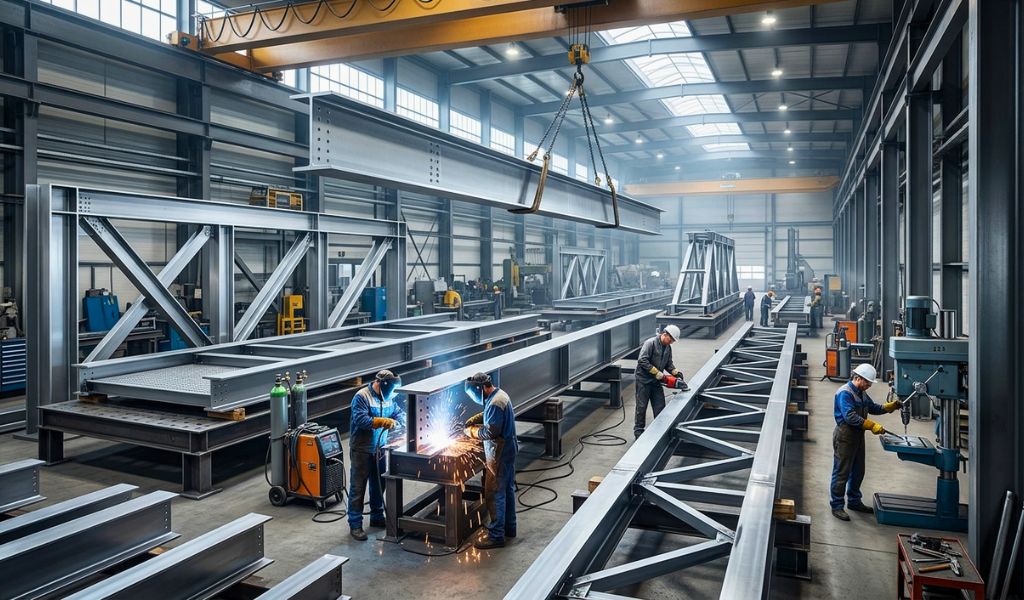
Industrial steel fabrication begins with engineering drawings, material specifications and project requirements. Steel is inspected prior to being processed on appropriate cutting, drilling, bending and forming equipment.
Fabricated components may include structural frames, columns, beams, supports, platforms, and connection elements. Welding and other types of joining are performed in accordance with the relevant specifications and are subject to inspection and finishing.
This is especially true in an industrial setting where structural components often interface with equipment, mechanical systems and other building elements.
What is involved in the structural fabrication process?
A professional structural fabrication process generally follows several stages:
-
Reviewing designs: Fabricators look at drawings, dimensions, and specifications.
-
Material preparation: Selection and inspection of appropriate steel materials.
-
Steel Shaping: Cutting and shaping steel is done to the required dimensions.
-
Drilling and forming: Holes, bends, and other details are accurately generated.
-
Welding and Assembly: Components are joined per approved procedures.
-
Inspection: The product is inspected against dimensional and workmanship requirements.
-
Surface treatment: Where required, appropriate finishing or protective treatments are applied.
-
Delivery: Finished parts are packed for safe transport and installation on site.
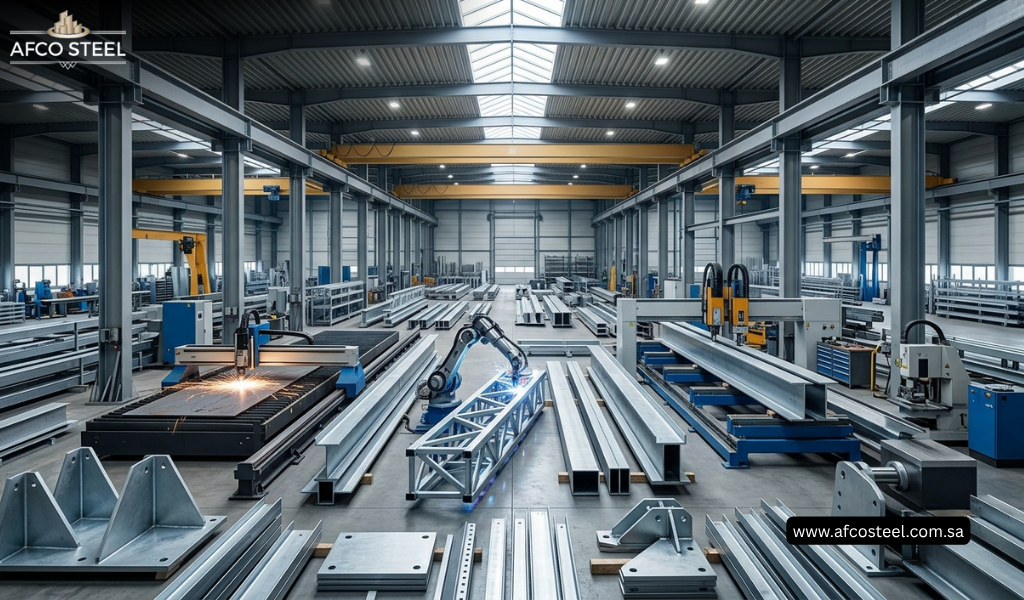
Well-managed processes lead to consistency from raw material to finished component.
How do I choose a structural fabrication company?
Cost alone is not the only aspect of picking the right provider. First, consider its experience with projects like yours and its capacity to manage the scope of work required.
Enquire about production capacity, quality-control procedures, engineering support and delivery planning. Also worth checking is whether the company is able to handle both standard requirements and custom steel fabrication when the project designs require specialised components.
A capable supplier with experience in the local market can provide valuable insight into the requirements of a project and the working conditions for Saudi Arabia’s major construction and industrial projects.
Afco Steel offers steel fabrication capabilities for projects requiring professionally fabricated structural components and dependable project support.
Practical Information Table
|
What to assess |
Why it matters |
What to look for |
|
Technical expertise |
Supports accurate production |
Experienced engineering and fabrication teams |
|
Quality control |
Helps maintain consistency |
Inspection and documented procedures |
|
Equipment |
Affects fabrication accuracy |
Modern cutting, drilling and welding equipment |
|
Project capacity |
Supports larger requirements |
Suitable production facilities and workforce |
|
Custom capability |
Handles specialised designs |
Custom steel fabrication expertise |
|
Industrial experience |
Helps with complex facilities |
Industrial steel fabrication experience |
|
Delivery planning |
Reduces project delays |
Clear scheduling and logistics coordination |
How does fabrication affect the durability of steel structures?
Durability begins with the quality of the materials and runs through every stage of fabrication. Problems that will affect performance over the long term can be caused by wrong size, bad welds, lack of preparation, or unsuitable finishing.
Professional structural fabrication services are all about making components in a precise and repeatable manner. Good welding, inspection and surface treatment can help to protect fabricated steel from early deterioration.
This is especially important in Saudi Arabia where heat, dust and challenging environmental conditions can put extra strain on construction materials.
Therefore, the reliable fabrication of steel structures requires special attention to workmanship, quality assurance and the intended operating environment.
Also read:- How Do You Choose the Best Structural Fabrication Company for Your Project?
Why does experience matter in structural fabrication services?
Every project has its own structural requirements. A good fabrication company should be able to read technical drawings, organise production and be flexible enough to change its processes to fit to the needs of the project.
Experienced structural fabrication services can also help identify practical fabrication considerations before production. This can reduce unnecessary revisions and make the installation easier.
Afco Steel can assist clients seeking a reliable fabrication partner in Saudi Arabia for complex commercial, infrastructure, and industrial requirements.
What should you ask before appointing a fabricator?
Before committing to a provider, consider asking:
-
What types of steel structures have you fabricated previously?
-
What quality-control procedures are followed?
-
Can you handle project-specific or customised components?
-
What fabrication equipment and production capacity do you have?
-
How are inspections and dimensional checks managed?
-
What is the expected production and delivery schedule?
By answering these questions clearly, you can begin to compare providers on capability and not just quoted price.
Conclusion
Reliable structural fabrication is essential for producing steel components that are accurate, strong, and suitable for demanding construction environments. From material preparation and cutting through to welding, inspection, and finishing, each step can impact the performance and longevity of the final structure.
Compare providers on technical expertise, quality control, equipment, production capacity, project experience, and delivery reliability. A good partner should also be able to offer structural steel fabrication, steel structure fabrication, structural fabrication services, custom steel fabrication, and industrial steel fabrication as per your project requirements.
If you’re planning a construction or industrial project in Saudi Arabia, contact Afco Steel to discuss your structural fabrication needs and find a fabrication solution that works for you.
FAQs on Structural Fabrication
1. What is structural fabrication used for?
Structural fabrication is used to manufacture steel components such as beams, columns, frames, supports, and other elements used in buildings, industrial facilities, and infrastructure.
2. Why is structural steel fabrication important?
Structural steel fabrication ensures steel components are accurately cut, drilled, formed, welded, and inspected according to project specifications before they are assembled on site.
3. What makes a good steel fabrication company?
A good steel fabrication company should have experienced personnel, suitable equipment, effective quality-control systems, production capacity, and a proven ability to meet project specifications and deadlines.
4. Can structural fabrication be customised for a project?
Yes. Custom steel fabrication allows steel components to be manufactured according to specific engineering drawings, dimensions, connection requirements, and project conditions.