Oil, gas and petrochemical operations require strong and reliable infrastructure to support demanding industrial applications. Each component, whether it is a processing plant, pipe support system, equipment platform or storage facility, has to be designed and manufactured to meet project specifications. The steel fabrication work involved in making these components enables contractors to achieve structural strength, dimensional accuracy, and ease of installation.
Major industrial developments across Saudi Arabia require steel solutions that can endure demanding operating environments. Professional steel fabrication services in Saudi Arabia can help project teams turn engineering drawings into functional steel parts for construction, processing, and storage applications.
Knowledge of the fabrication process, materials required, and quality checks can help companies choose the right fabrication partner for their next industrial project.
Quick Summary
-
Steel fabrication turns raw steel into parts for industrial plants, equipment supports, and structural frameworks.
-
Oil, gas, and petrochemical facilities can benefit from industrial steel fabrication, which offers customised, project-specific solutions.
-
This checks the structure’s integrity and quality to help reduce installation problems and rework.
-
The materials you choose, protective coatings, and maintenance planning will affect the durability over time.
-
Working with a seasoned steel fabrication company in Saudi Arabia guarantees that the manufacturing process meets the site requirements.
The Role of Steel Fabrication in Oil, Gas and Petrochemical Projects
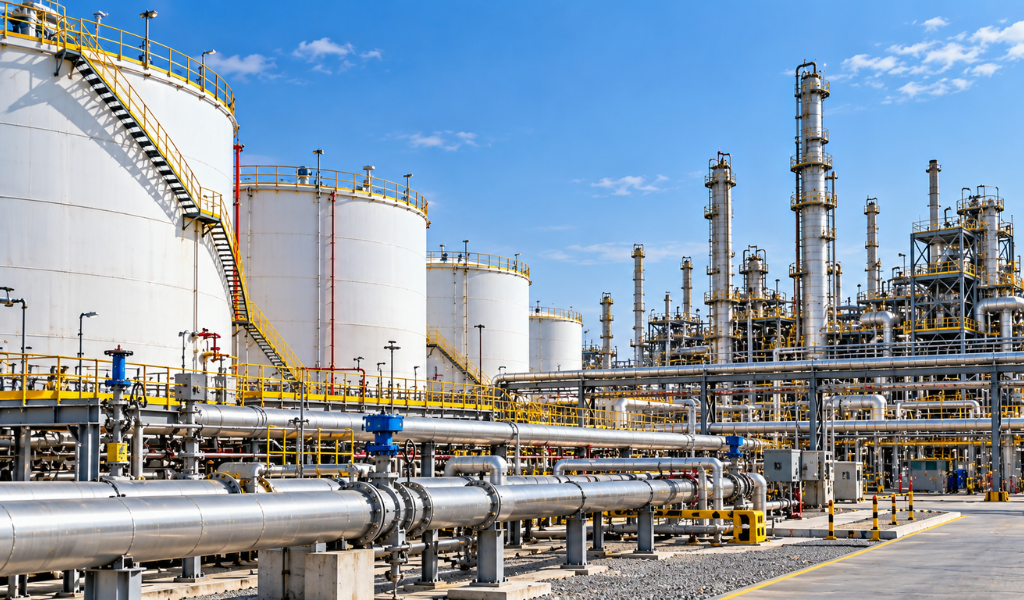
Complex equipment, heavy machinery, processing systems, and access structures are found in oil and gas facilities. Fabrication of steel creates the structural elements needed to support these installations and organise industrial workspaces.
1. Building Strong Structural Frameworks
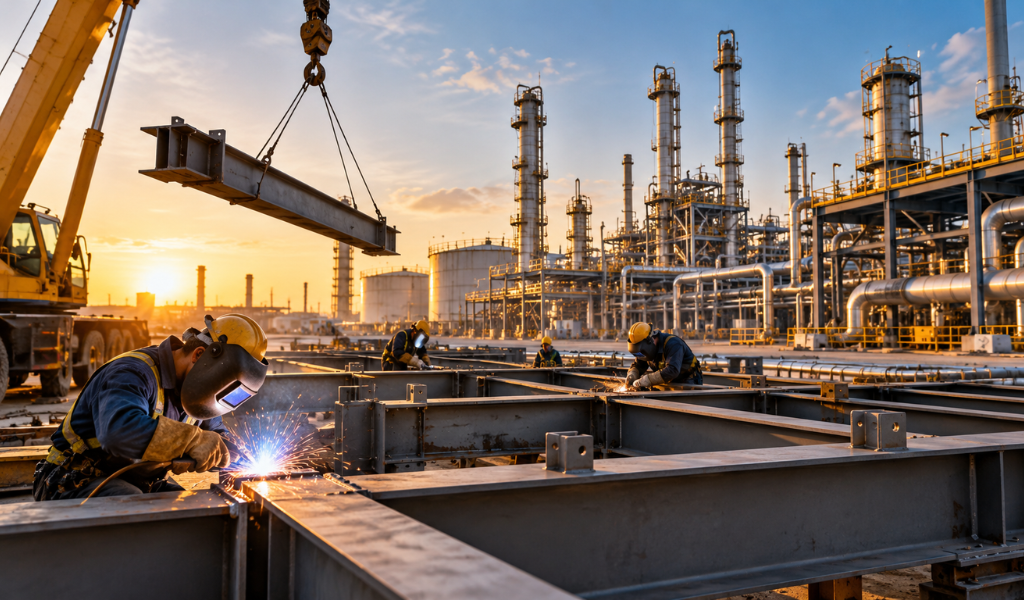
Steel frameworks are required by processing plants, refineries and petrochemical facilities to support equipment, platforms, walkways and operational buildings. Structural steel fabrication turns engineered designs into beams, columns, bracing and other load-bearing components.
Correct fabrication helps these elements fit during installation. It also helps co-ordination between structural engineers, construction contractors and site installation teams.
2. Supporting Equipment and Pipework
Industrial facilities are composed of large networks of pipes, valves, pumps and processing equipment. Fabricated steel supports supporting these systems are provided in accordance with approved engineering drawings.
Depending on the project, components can include pipe racks, equipment bases, access platforms and maintenance walkways. Their dimensions, loads and connections shall be checked against the relevant project specifications.
3. Improving Construction Efficiency
Fabricating components in a controlled workshop reduces the amount of cutting, drilling and welding needed on site. Sections can be pre-assembled where possible in the project design to be transported to the installation site.
Provided that fabrication schedules, transport arrangements, lifting plans and site access are properly managed, this approach can improve construction co-ordination.
What Is the Steel Fabrication Process for Industrial Projects?
Fabrication of steel using a structured process helps to ensure that components are fabricated to the required dimensions, material specifications and quality expectations.
Review Engineering Drawings
The fabrication team examines approved drawings, material grades, dimensions, connection details, and project requirements. Any differences should be clarified before manufacturing begins.
Select and Prepare Materials
The choice of steel depends on the application, design requirements, and working environment. The project’s quality plan may also require material identification and traceability.
Cut, Drill and Shape the Steel
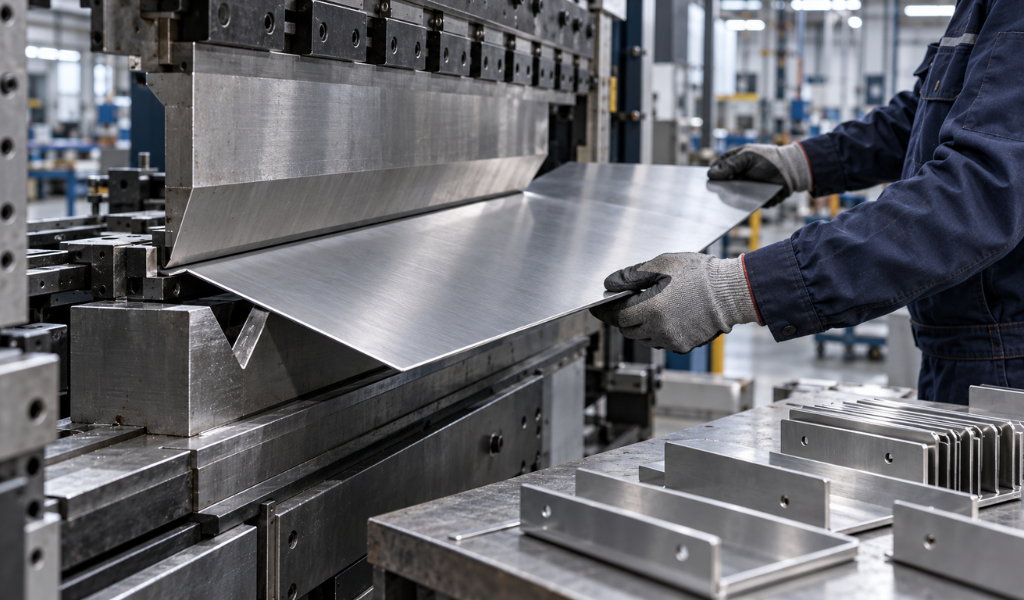
The steel sections and plates are cut, drilled, bent, or shaped to the approved design. Good measurements at this point will save problems with alignment and fitting later.
Assemble and Weld Components
Fabricators assemble and weld the pieces they’ve prepared. Welding, bolting, and other specified joining methods are performed in accordance with approved procedures and applicable project requirements.
Inspect and Apply Surface Protection
Quality checks may include dimensional inspections, weld examinations, and non-destructive testing as required. Depending on exposure conditions and coating system, proper surface preparation and protective coatings may help reduce corrosion.
Prepare for Delivery and Installation
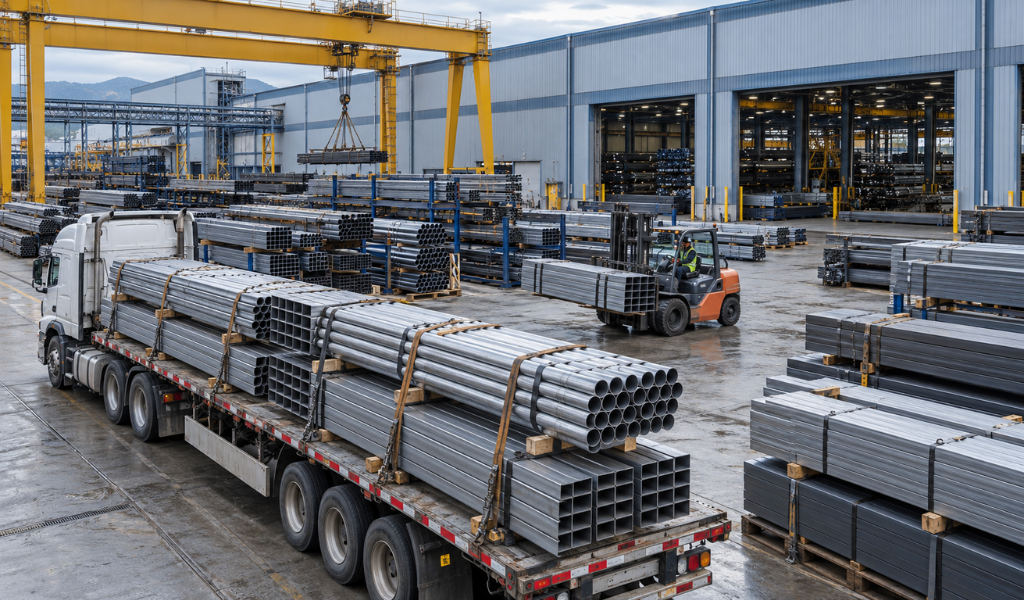
Identifying, documenting, and preparing finished parts for shipping. Good packaging, lifting plans, and sequencing of deliveries all help to reduce damage and support safe installation at the project site.
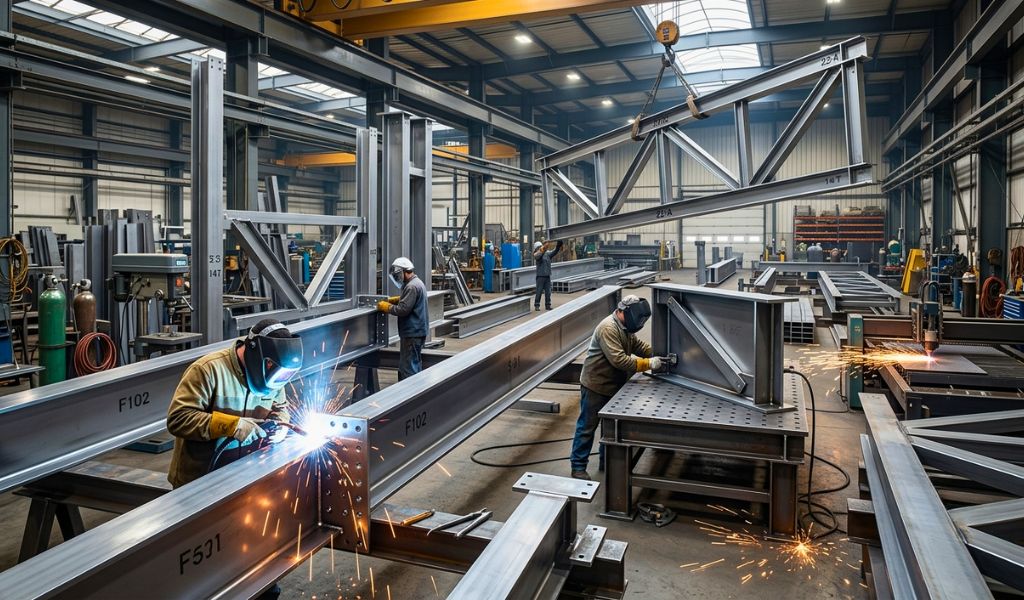
Key Applications of Industrial Steel Fabrication
Industrial steel fabrication serves a number of critical areas of oil, gas and petrochemical infrastructure.
-
Structural frames: Steel beams, columns, bracing and supporting structures of industrial buildings and process plants.
-
Pipe racks and supports: Manufactured frameworks that carry pipework and associated services.
-
Equipment support systems: Steel bases, frames, and platforms for specified equipment loadings.
-
Storage infrastructure: Production of steel components for appropriate storage tanks, silos and related industrial facilities, according to their specific engineering needs.
Each application requires a solution specific to its intended function, loading conditions, operating environment, and applicable safety requirements.
How to Choose Steel Fabrication Services in Saudi Arabia?
Selecting a fabrication partner is more than just price points. The right company will understand technical drawings, project schedules, material requirements, and the quality controls to be expected in industrial construction.
Here are some things to keep in mind when evaluating a steel fabrication company in Saudi Arabia:
-
Technical capability: Does the company have the ability to produce the necessary parts according to approved drawings and specifications?
-
Quality management: Are material checks, dimensional inspections, and welding controls adequate for the project?
-
Safety practices: Are workshop activities, lifting operations and installation interfaces responsibly managed?
-
Corrosion protection: Can the company supply or schedule the required surface preparation and coating needs?
-
Project coordination: Is the fabrication, documentation, transport and delivery compatible with the construction schedule?
-
Relevant experience: Does the supplier understand the practicalities of industrial steelwork and complex project environments?
A clear scope of work, agreed-upon inspection requirements, and a delivery schedule can help avoid misunderstandings during execution.
Practical Comparison: Which Fabrication Solution Does Your Project Need?
|
Project requirement |
Potential steel solution |
Key consideration |
|
Industrial buildings and process areas |
Structural steel frameworks |
Load capacity, connections and dimensional accuracy |
|
Extensive pipe networks |
Pipe racks and steel supports |
Pipe loads, clearances and access requirements |
|
Equipment access and maintenance |
Platforms, stairs and walkways |
Safe access, handrails and applicable design requirements |
|
Corrosion-prone operating environments |
Protected steel components |
Exposure conditions, coating specification and maintenance |
|
Storage and material handling |
Suitable tank, silo or support components |
Contents, operating conditions and project-specific engineering |
|
Time-sensitive construction |
Workshop-fabricated or pre-assembled sections |
Transport limits, lifting plans and installation sequence |
The final selection should always follow the approved engineering design and the requirements of the specific facility.
Also read: How to Select a Steel Structures Fabrication Service Provider Near Me?
Why Quality and Safety Matter in Steel Fabrication Work?
Poorly controlled fabrication can lead to dimensional mismatches, connection problems, additional site work and delays. In the oil, gas and petrochemical environments, unsuitable materials or defective components can also cause serious operational risks.
Reliable steel fabrication work is therefore based on consistent quality checks, competent personnel, suitable equipment and clear documentation. Welding inspections, material verification and dimensional checks shall be carried out in accordance with the approved inspection and test plan for the project.
Safety must also extend beyond the factory. Safe lifting, transport, storage and installation are the prerequisites for the protection of workers and the prevention of damage to finished components.
Afco Steel supports industrial construction requirements through steel fabrication solutions tailored to project needs. Businesses planning a new facility or an industrial upgrade can discuss their drawings, technical specifications, and fabrication requirements with the team to identify a suitable approach.
Conclusion
Steel fabrication work is a core component of oil, gas, and petrochemical construction, providing the frameworks, supports, platforms, and other steel components required for tough industrial operations. Proper manufacturing, proper inspections, and good project coordination help to improve installation efficiency and long-term reliability.
For contractors and industrial operators looking for steel fabrication services in Saudi Arabia, selecting a capable partner early in the project can assist in better planning, quality control, and delivery coordination. A practical first step toward a fit-for-purpose steel solution that will last is to consult your technical requirements with an experienced fabrication team.
FAQs on Steel Fabrication Work
1. What is steel fabrication work in the oil and gas industry?
Steel fabrication work involves cutting, shaping, assembling, and joining steel components used in oil and gas facilities. Typical applications include structural frameworks, pipe racks, equipment supports and access platforms.
2. Why is industrial steel fabrication important for petrochemical plants?
Industrial steel fabrication provides the structures and supports needed for processing equipment, pipework, and maintenance access. Accurate fabrication helps components meet design requirements and fit correctly during installation.
3. What are the main stages of the steel fabrication process?
The main stages typically include drawing review, material selection, cutting, drilling, assembly, welding or bolting, inspection, surface protection, and delivery preparation. Exact steps depend on the component and project specifications.
4. How do I choose a steel fabrication company in Saudi Arabia?
Assess technical capability, quality inspection procedures, safety practices, corrosion protection options, delivery planning, and relevant industrial experience. Confirm that the company can meet your approved drawings and project requirements.