
Fabrication of steel structures has emerged as an extensive domain in contemporary construction industry, impacting various sectors including industrial & commercial buildings, and infrastructure projects. To accommodate this increasing demand for construction materials that are more durable, rapid, and cost-effective, steel fabrication is perpetually transforming into novel processes and inventions. By knowing how the steel structures are fabricated, project owners, contractors, and developers will be able to make better decisions that will result in safety, durability, and long-term benefits.
What Is Steel Structures Fabrication?
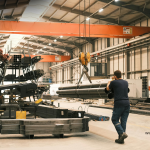
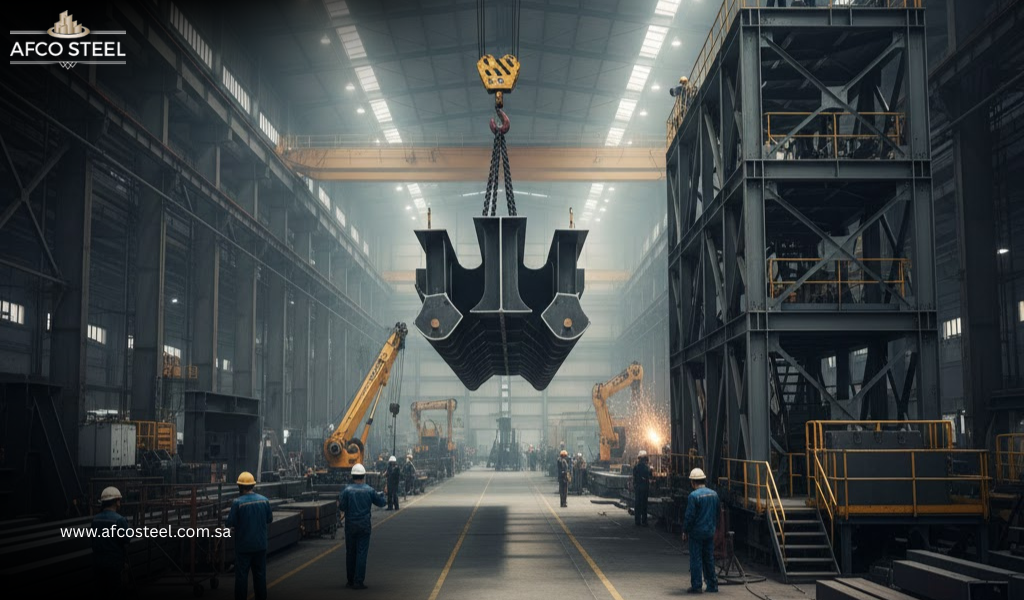
Fabrication of steel structures involves the cutting, shaping, assembling and finishing of steel components that are used in construction. These fabricated steel components are the heart of buildings, warehouses, bridges, power plants, and industrial facilities.
In contrast to on-site assembly only, fabrication occurs in controlled environments to guarantee precision, quality control and uniformity. It also minimizes construction delays and material wastage, thus, enhancing overall structural integrity.
Core Processes in Structural Fabrication Work
The structural fabrication process consists of a series of steps that take steel from raw to ready-to-install load-bearing members.
Design and Engineering
Involving comprehensive engineering drawings and three dimensional models at the start of every project These plans assure that all produced steel members are adequate structurally, are in accordance with safety regulations, and meet project needs.
Cutting and Shaping
Steel fabrication construction in modern automatically high precision based on CNC machines, laser cutting, and plasma cutting. They can be used to perform complicated designs effectively and with minimal wastage of materials.
Welding and Assembly
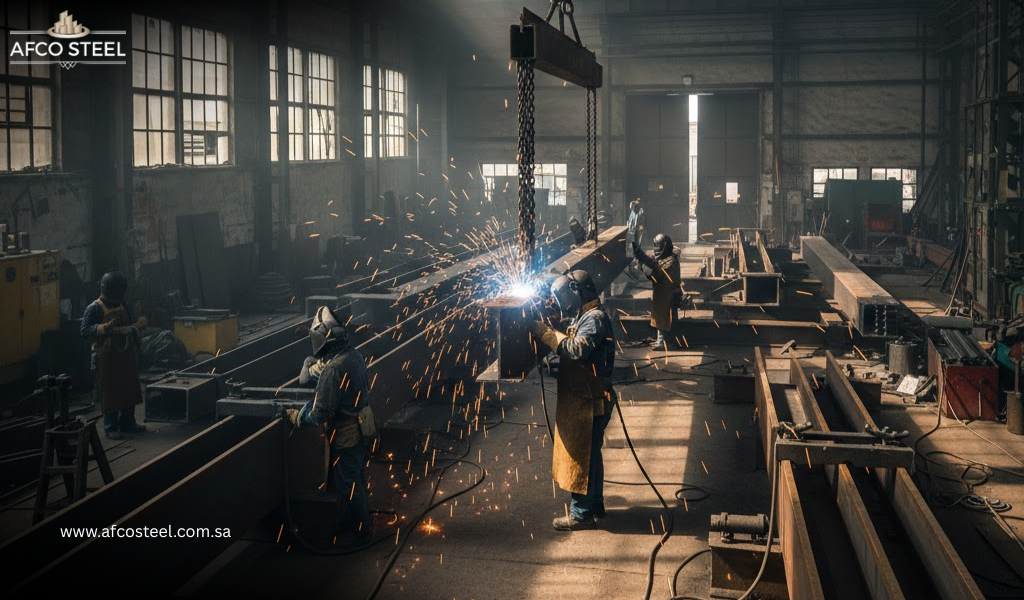
It is a primary activity in production work, especially in structural fabrication. Beams, columns, and frames are assembled by highly skilled fabricators using sophisticated welding methods, ensuring strength and durability.
Surface Treatment and Finishing
The life of steel structures is further increased, and resistance to corrosion as well as aggressive environments is improved (for example, through protective coatings, galvanizing or fire-resistant treatments).
Steel Fabrication Construction in Modern Projects
Steel fabrication construction provides a level of flexibility and scalability that is unmatched. Steel structures are adaptable to meet special load, design, and environmental needs regardless of it being about a high-rise commercial building or a heavy industrial facility.
These also cut down on-site labor, accelerate the installation process, and enhance the overall productivity of the project. It is therefore, a great alternative for fast-track building projects and large-scale construction adventures.
Role of Structural Steel Fabrication Companies in Saudi Arabia
he significant infrastructure and industrial developments in Saudi Arabia are supported by various structural steel fabrication companies in the country. As investments in energy, manufacturing, logistics, and commercial construction expand, so does the demand for superior fabricated steel.
These companies emote over international regulatory needs, advanced mechanism, and machinery, and skilled workforce capability to obtain on time concrete steel solution. One last thought — the right guy down the road — selecting the proper fabricator will help ensure the success of your project, maintain costs and keep the structure performing for a long time.
Innovations Shaping the Structural Steel Fabrication Market
Structural steel fabrication is a business that is changing with the times to advance in technology and sustainability.
Automation and Digital Fabrication
Whether it’s robotic welding or other automated cutting systems, digital simulation brings more accuracy and less human error.
Sustainable Steel Practices
Green building involves covering materials that are recyclable, energy-efficient processes, and waste reduction initiatives.
Smart Design Integration
BIM allows for an integrated flow of information from design to fabrication and installation, eliminating expensive field rework.
These advancements allow for speedy, reliable, and future-ready fabrication of steel structures.
Why Steel Structures Fabrication Is a Smart Investment?
Steel structures fabrication provides several long-term advantages by being resilient, adaptable, and cost-effective. Steel is impervious to bugs and fire and often extreme temperatures (making it a great choice for an extremely hot/cold environment).
Experienced professionals in fabrication means quicker time to the market, low maintenance expenses, and high safety standards for businesses and developers.
Choosing the Right Steel Fabrication Partner
Success in the prototyping and final product often turns upon selecting the right fabrication partner. Look for a fabrics partner with experience, certified quality standards, modern equipment and a history of proven projects successfully delivered. A reliable fabrication company also serves as a strategic partner who ensures optimized design, cost reductions, and timely delivery of projects.
Conclusion
The Steel Structures Fabrication process has continued to shape the innovation, efficiency, and strength of modern construction. With the advancement of technology and the expansion of the structural steel fabrication market, companies that integrate premium fabrication solutions continue to be at a competitive edge. Choosing the right experts to partner up with ensures you long-lasting structures, faster execution time, and long-term success in the ever-evolving world of construction.
FAQs on Steel Structure
1. What is steel structures fabrication used for?
Steel structures fabrication is used to create strong frameworks for buildings, industrial facilities, bridges, warehouses, and infrastructure projects.
2. How does structural fabrication work improve construction speed?
Structural fabrication work allows components to be manufactured off-site, reducing on-site labor and enabling faster installation.
3. Why choose steel fabrication construction over traditional methods?
Steel fabrication construction offers higher strength, flexibility, durability, and reduced maintenance compared to traditional building materials.
4. How is the structural steel fabrication market growing?
The structural steel fabrication market is expanding due to infrastructure development, industrial growth, and demand for sustainable construction solutions.
5. What should I look for in a fabrication company?
Look for experience, compliance with standards, modern technology, skilled workforce, and a strong project portfolio.